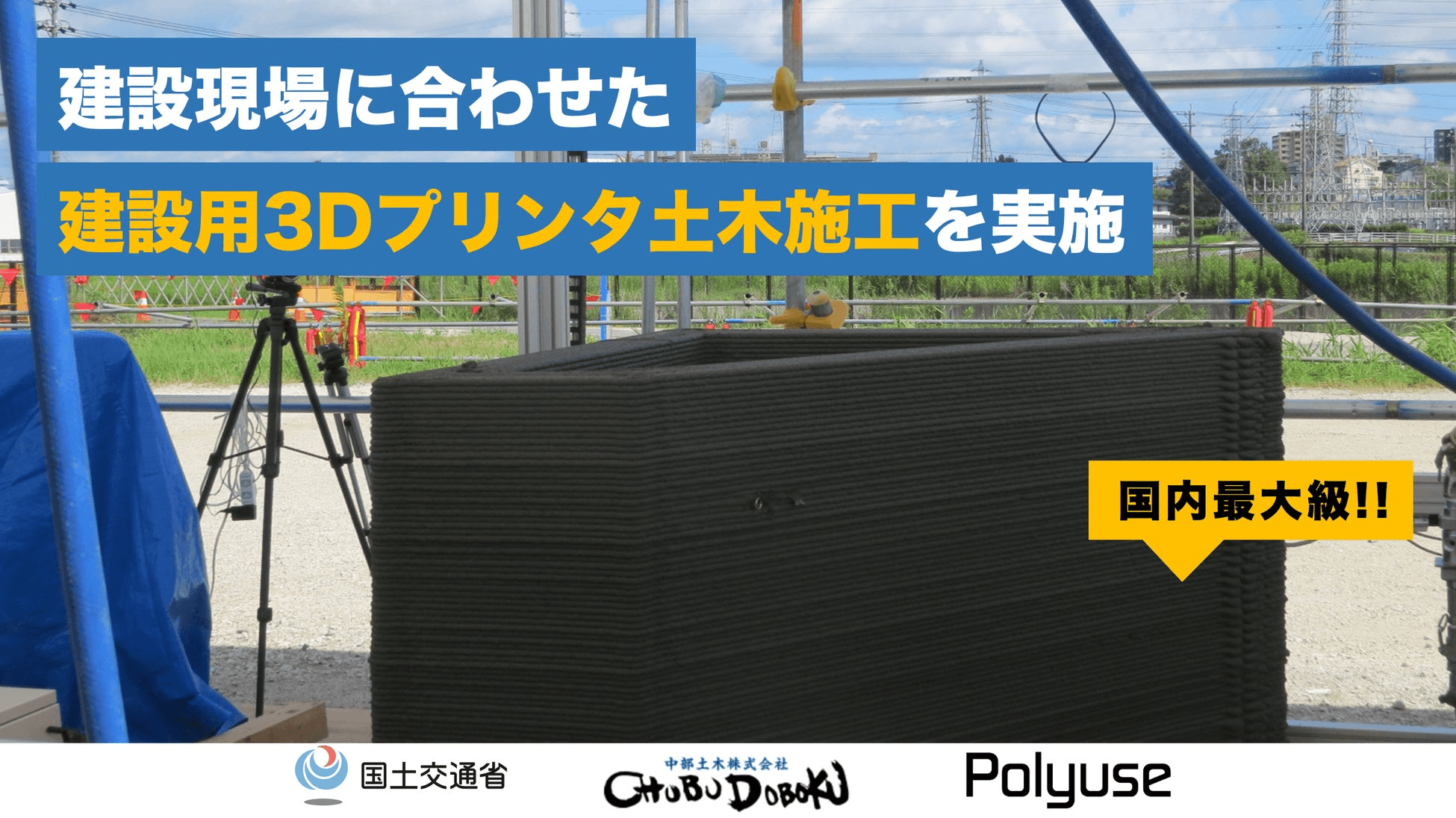
On the FY2021 Meishi National Highway Toyota District Road Construction Work (client: MLIT Chubu Regional Development Bureau), Polyuse Inc. (Head office: Minato-ku, Tokyo; Representative Directors: Takuya Iwamoto / Wataru Ooka; hereinafter "Polyuse"), a developer of construction 3D printers, worked with Chubu Doboku Co., Ltd. (Head office: Nagoya City, Aichi Prefecture; Representative Director: Yoichi Namba; hereinafter "Chubu Doboku") to print and construct, using a 3D printer, a gravity retaining wall: a civil engineering structure for public works that forms the foundation of a bypass project.
- Overview of the public works project
A 5 m section of the gravity retaining wall used in the FY2021 Meishi National Highway Toyota District Road Construction Work, the construction site of the National Route 155 Toyota-Minami Bypass, was printed and constructed using 3D printing technology. This was the first public works project using a construction 3D printer within the jurisdiction of MLIT's Chubu Regional Development Bureau, and the largest civil engineering construction using a construction 3D printer carried out in Japan to date.
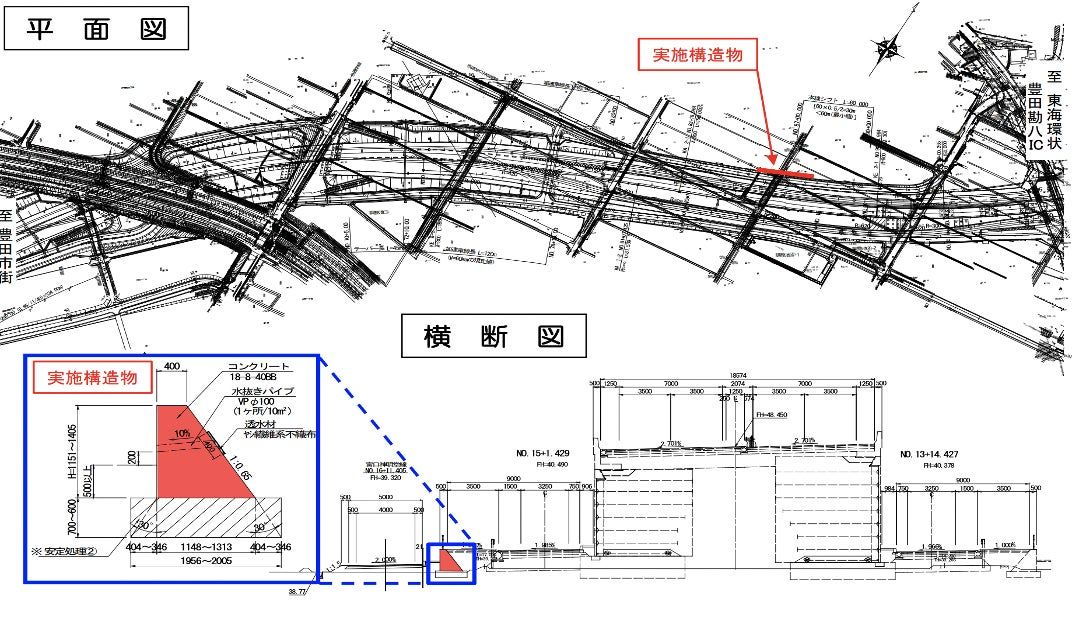
Components forming a key part of the foundation of the National Route 155 Toyota-Minami Bypass were printed and installed along a 5 m section
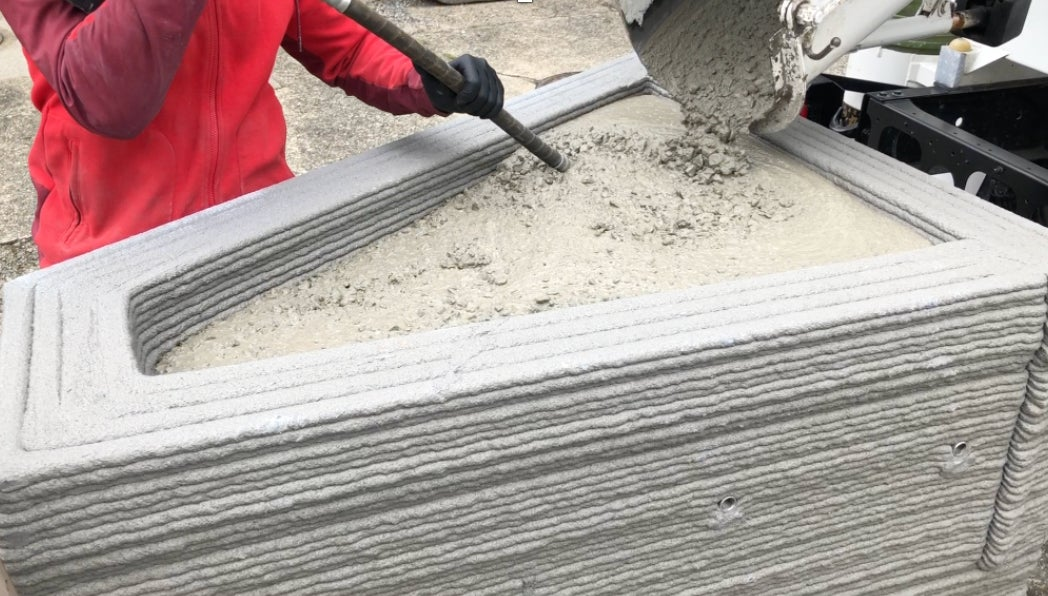
Versatility and constructability were improved by using the 3D-printed structure as formwork, which was then filled with ready-mixed concrete
In conjunction with the printing work, MLIT, Chubu Doboku and Polyuse jointly held a technical tour focused on 3D printer construction. Using construction 3D printers to advance DX in the infrastructure sector, where aging is progressing, keeps formwork for concrete structures to a minimum and is expected to help solve the chronic shortage of skilled workers, and nearly 100 people from the industry attended the tour on the day.
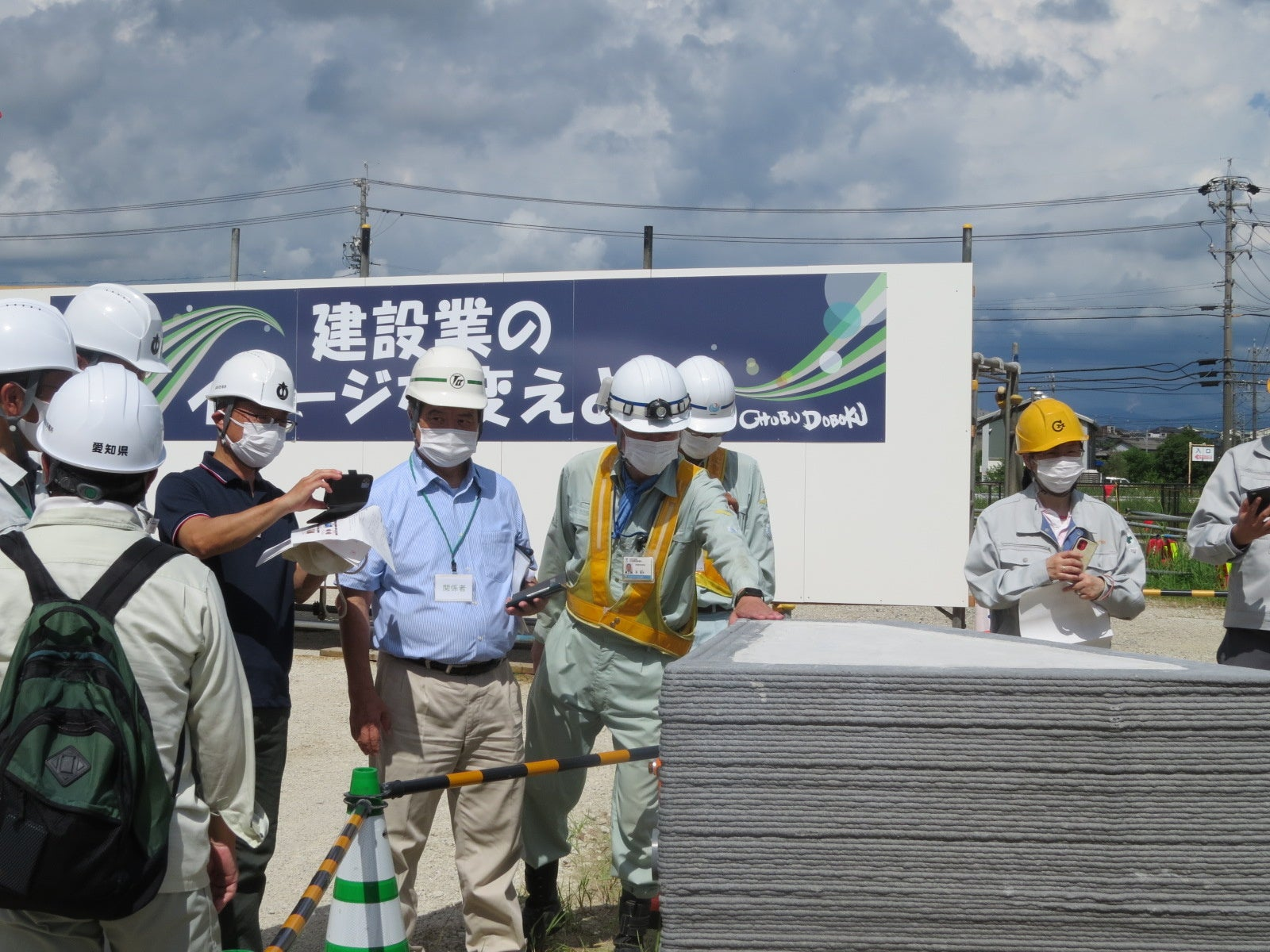
Construction 3D printing technology is expected not only to ease labor shortages but also to shorten construction periods and enable design freedom
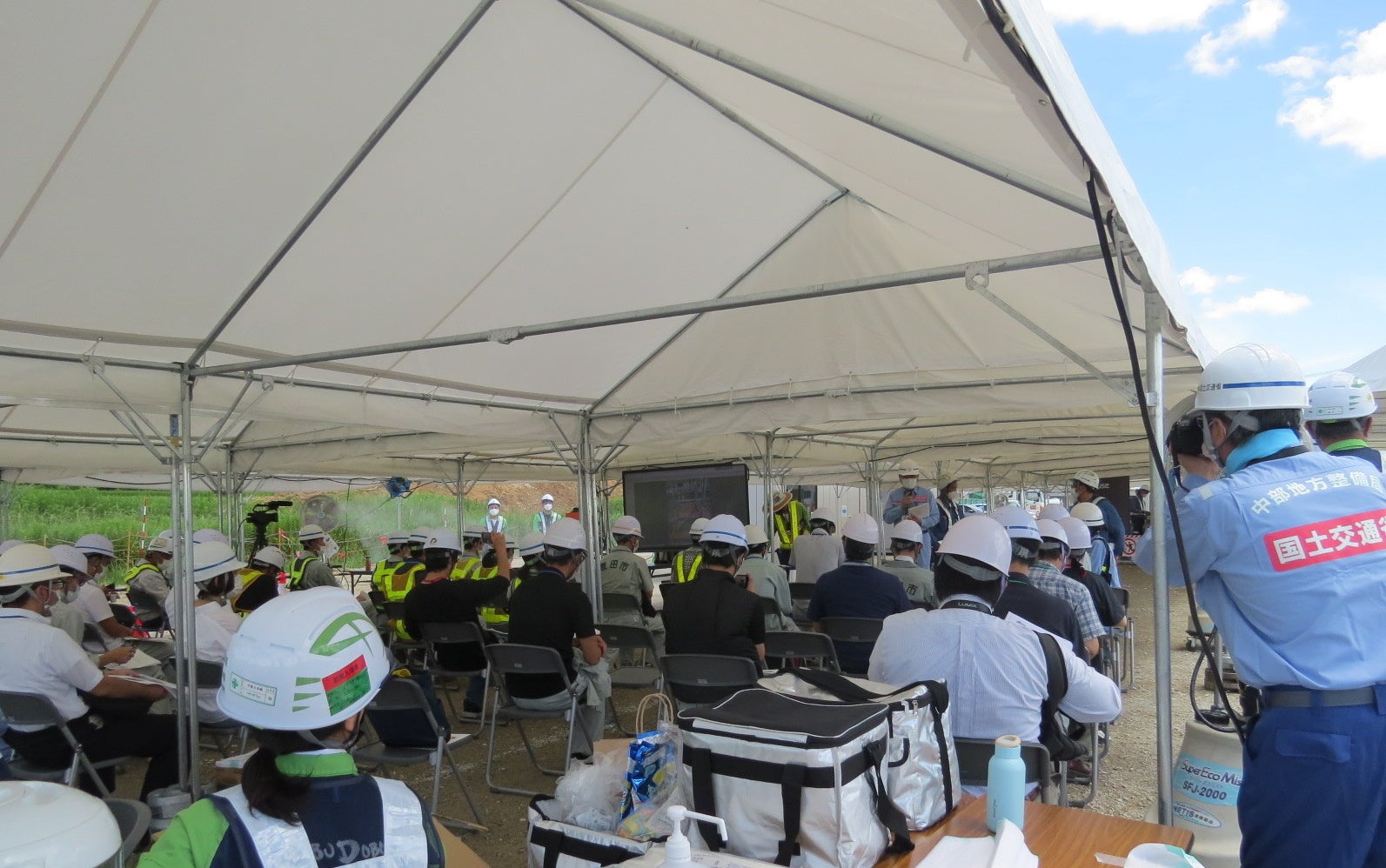
With COVID-19 precautions in place, many people attended, from government officials and construction professionals to people from education and the media
- Effects of this construction
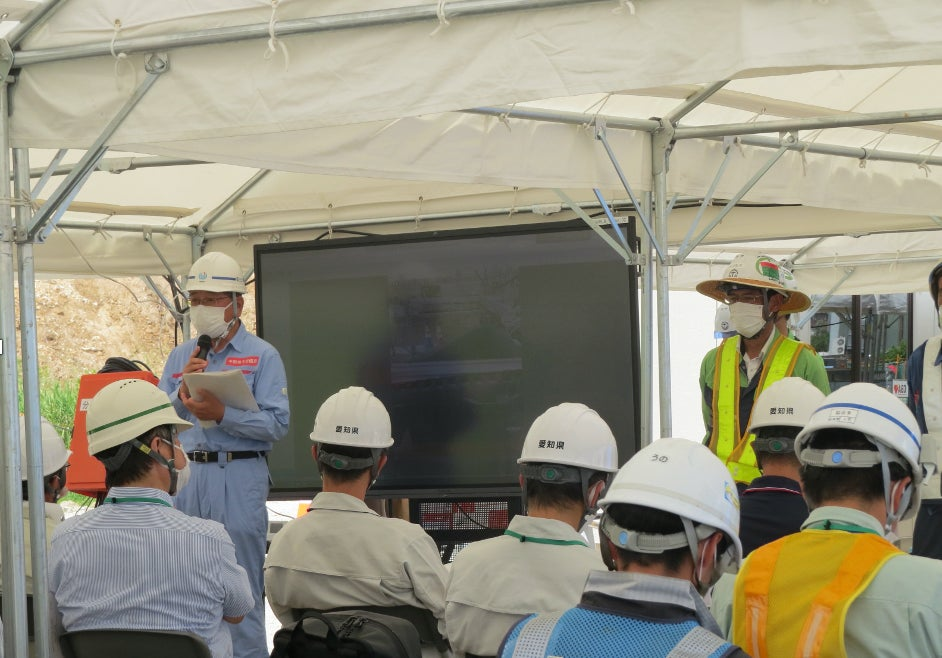
- Practical training was provided on a construction 3D printer developed through repeated discussions with construction companies, addressing the shortage of skilled workers and supporting ICT construction
- Using a construction 3D printer shortened the time required for construction
■Workers can take charge of printing with a construction 3D printer after three days of training
Traditionally, it has taken years of training and on-the-job experience for skilled workers to become fully capable professionals on construction sites, and while the industry has been considering how to secure the workforce of today and tomorrow, the time needed for training has been unavoidable.
As one approach to ICT adoption, we have built up a track record of demonstrations showing that construction 3D printing technology can help young workers become productive and stay in the industry in a shorter time than before.
On this Meishi National Highway Toyota District Road Construction Work, young employees (new hires) at Chubu Doboku played an active role. To carry out construction using the construction 3D printer, Polyuse provided Chubu Doboku's young staff with roughly three days of short-term training, after which they printed a gravity retaining wall that can be used in public civil engineering works.
Polyuse's construction 3D printers are designed to help workers acquire skills in a short time, and because the work involves relatively little danger and less heavy labor, staff from many quarters spoke positively about how it could address the construction industry's challenge of being seen as "hard, dirty and dangerous."
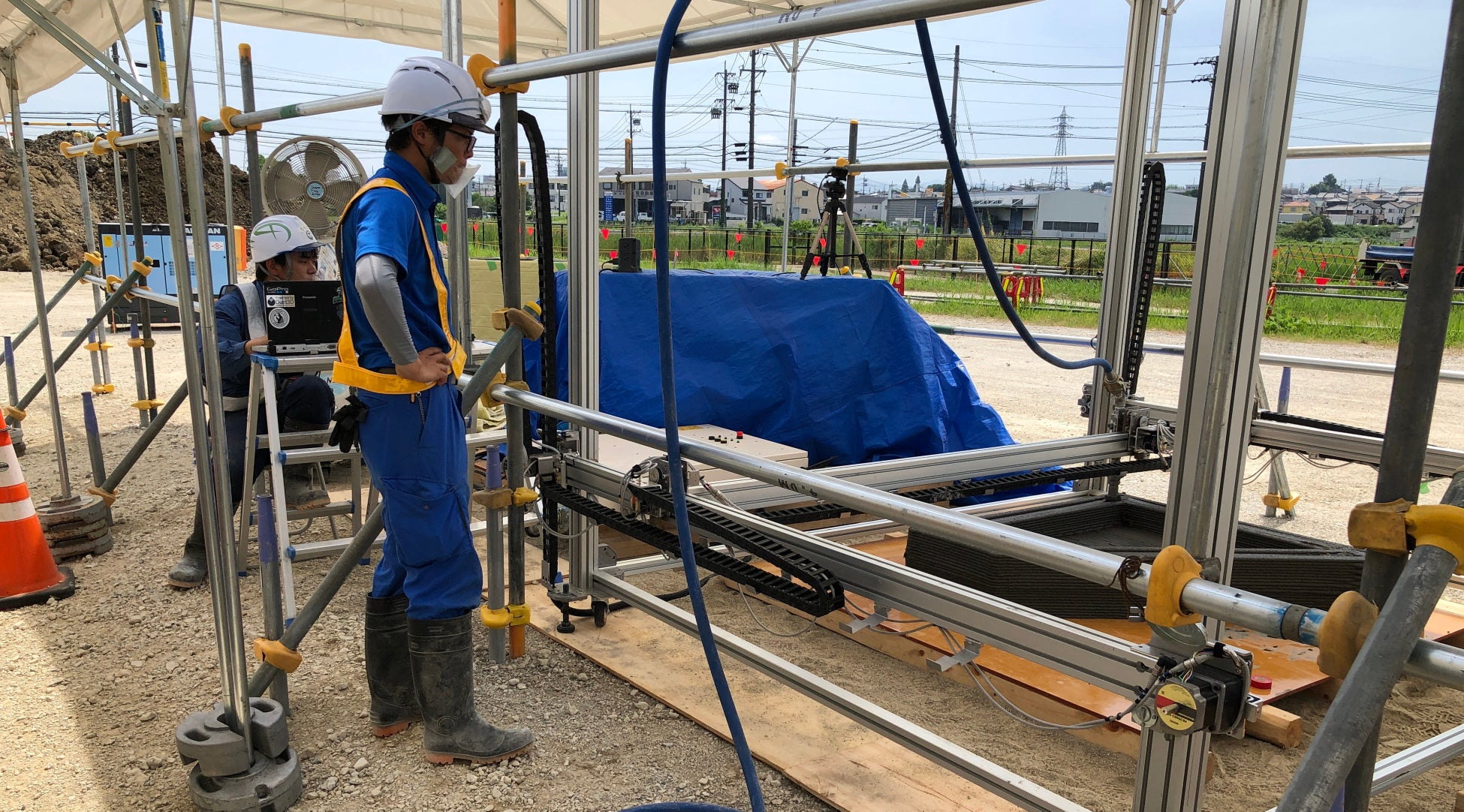
A simple printing yard was set up at the construction site, where the 3D printer was installed and Chubu Doboku's young staff carried out the printing
■Reducing man-hours on construction sites by using 3D printing for parts that conventional methods struggle to handle
In gravity retaining wall construction, size variations that differ from site to site, such as the differences in slope and angle that frequently arise on site, have been difficult to cover efficiently with conventional methods.
For example, gravity retaining walls have been one of the components for which it is hard to enjoy the advantages of the precast method, such as shorter construction processes and simplified on-site work.
Construction 3D printing can deliver benefits such as more efficient processes and simplified on-site work not only for gravity retaining walls but for a wide variety of structures, and we are advancing joint projects across Japan.
- The importance of verifying effects through actual construction
Polyuse has always valued dialogue with its partner companies, working with them on the practical use of 3D printers and the verification of their effects while they share the construction sites they actually work on and the challenges they face.
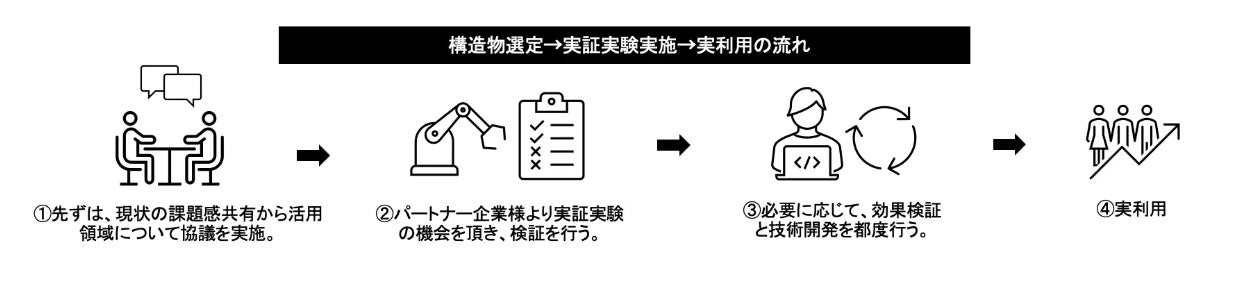
It is true that many aspects of the effects and potential of 3D printer construction remain unclear at present, in public works and across the construction industry as a whole. However, as in this case, by carrying out actual construction together with Polyuse's partner companies, led by Chubu Doboku, we are advancing the verification and optimization of its effects and operation.
Going forward, Polyuse and Chubu Doboku will continue to increase the number of construction 3D printer use cases in Japan, build up a track record with MLIT and other clients, spread construction 3D printers as a new technology, and forge ahead as leaders both in Japan and overseas.
- Comment from Deputy Director Sato, Meishi National Highway Office, MLIT Chubu Regional Development Bureau
This time, we were able to carry out the Chubu region's first demonstration construction of a gravity retaining wall using a 3D printer.
In the future, using 3D printers will make it possible to improve productivity and shorten schedules for concrete structures. 3D printers also make it easy to build not only straight structures but curved ones as well. 3D printing is still a technology at the trial construction stage, and going forward we want to confirm its effectiveness from various angles and work toward practical use so as to advance DX in the infrastructure sector.
- Taking steps together with our partners
[Yoichi Namba, President and Representative Director, Chubu Doboku Co., Ltd.]
Amid labor shortages and an aging workforce, carrying out projects such as disaster countermeasures and measures against aging infrastructure safely and efficiently will make it ever more essential to combine the passing on of experience and skills with DX. We aim to be a diverse company where people who aspire to develop local infrastructure can thrive, regardless of whether they come from civil engineering, the humanities or the sciences, and regardless of gender or nationality. 3D printer construction with Polyuse was a new challenge, and everyone from new hires to veterans was able to take part together, each in their own role. When people in other industries take an interest in construction, new technologies and materials are born, and as contractors and clients actively adopt them, I feel the potential to change the future of the construction industry is limitless.
[Kuniharu Takemura, Deputy General Manager, Construction Division, Chubu Doboku Co., Ltd.]
This demonstration construction was made possible thanks to the understanding of people in many different positions. I would like to take this opportunity to thank them once again.
Having solved various challenges together with Polyuse and taken a construction 3D printer out to a construction site to carry out demonstration construction of a gravity retaining wall, we came away with a strong sense of its future potential in terms of DX in construction, improving productivity and addressing the shortage of skilled workers.
We hope to continue trying demonstration construction on construction sites going forward.
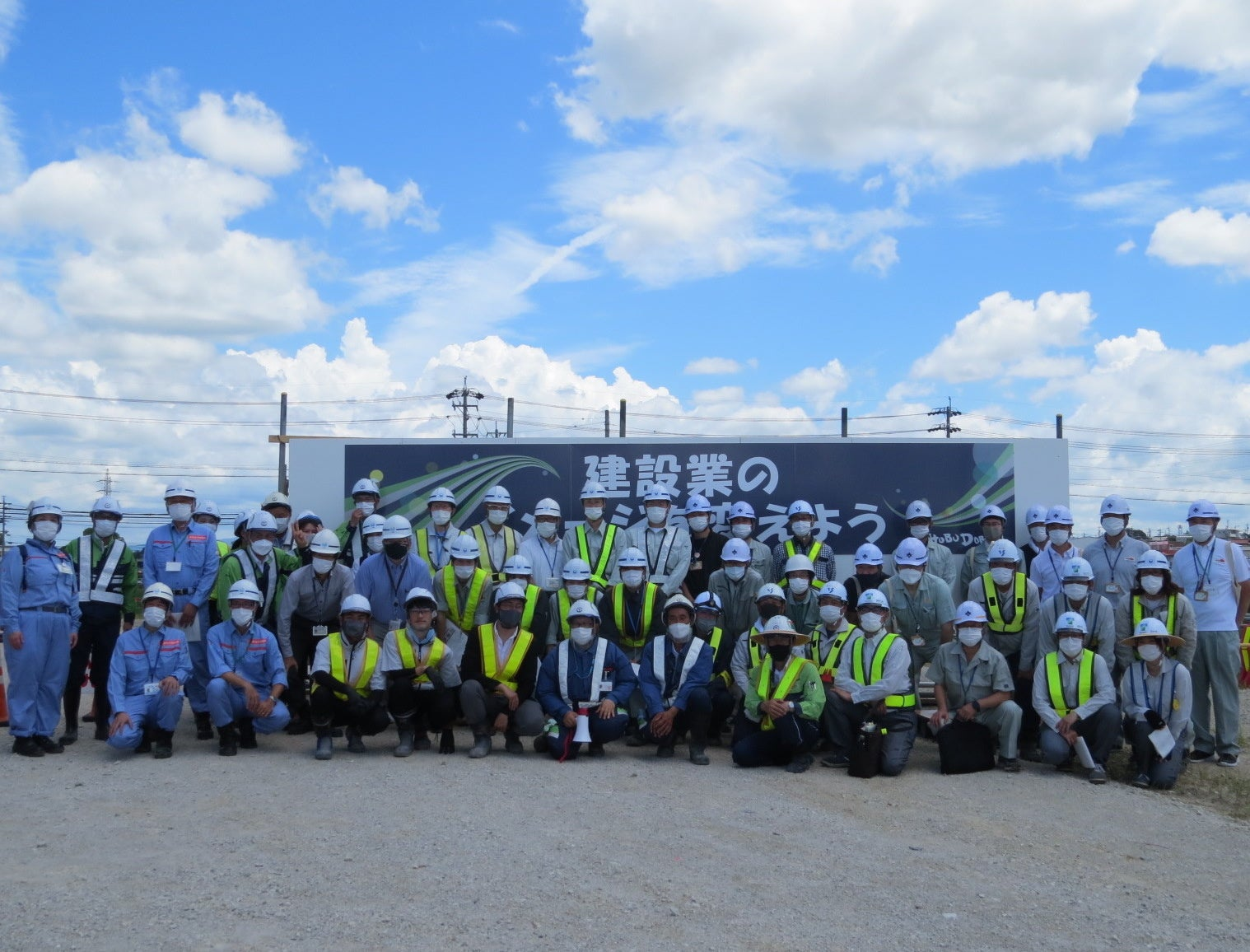
From the construction itself to the tour, this was made possible by careful discussion and preparation built on the understanding of everyone involved and, above all, by the great enthusiasm of the people who will support the construction industry of the future
- The current state of the construction industry and the background to 3D printer development
The construction industry is now on the verge of major change.
Behind this lies a serious labor shortage, in contrast to growing construction investment driven mainly by Expo 2025 Osaka, Kansai and the aging of social infrastructure.
The labor shortage in the construction industry is an issue closely tied to Japan's economy and infrastructure development, and the industry plays an extremely important role in recovery work in the event of a disaster and in job creation.
However, according to materials published by MLIT, of the approximately 3.4 million skilled workers, about 1.1 million are increasingly likely to leave the workforce over the next 10 years due to aging and other factors, while relatively few young people are entering the industry (those aged 29 and under make up only about 10% of the total)
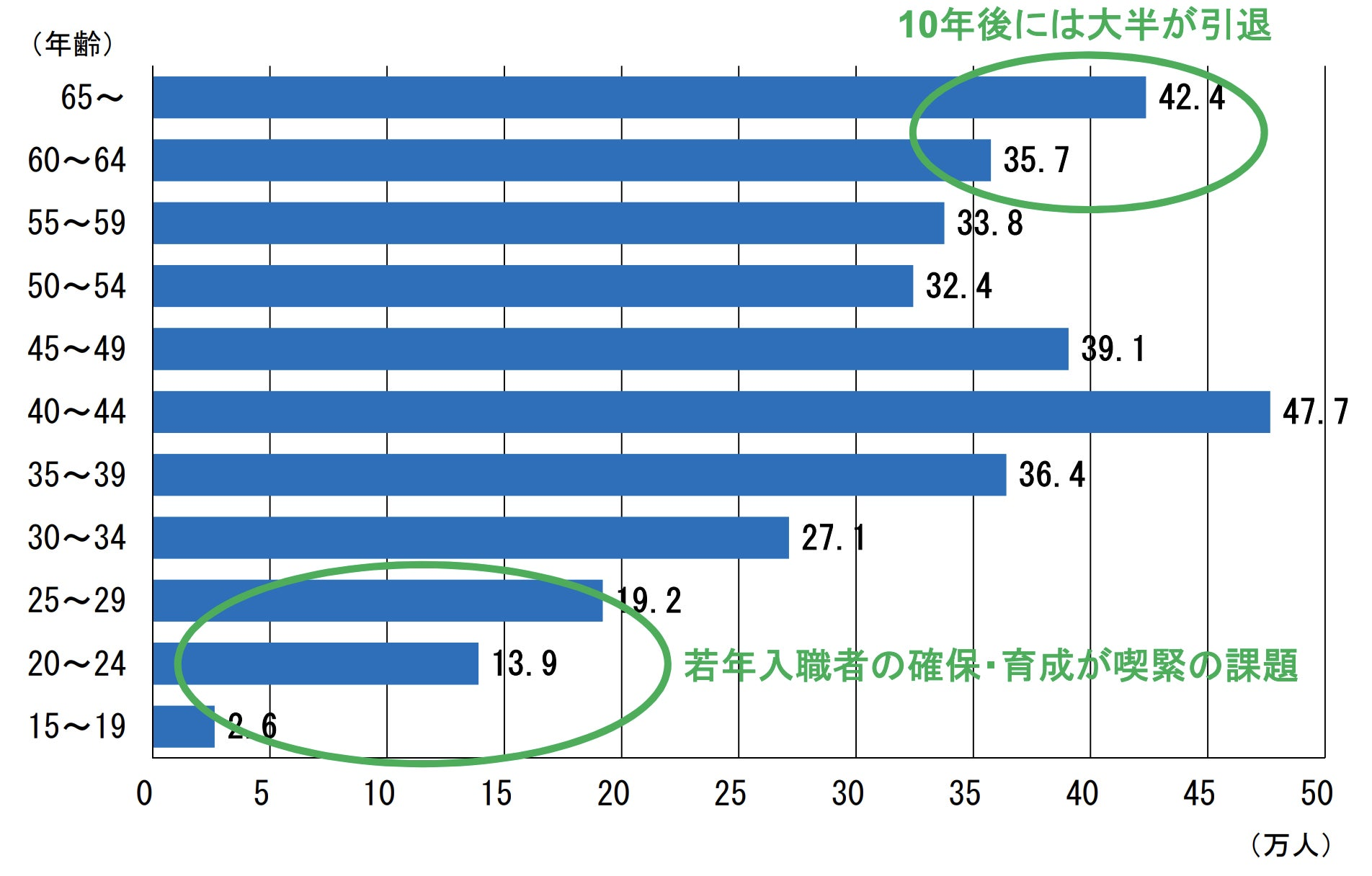
From MLIT's "Current Status and Challenges of the Construction Industry"
Furthermore, the social infrastructure that supports the lives of people in Japan is aging rapidly.
Infrastructure is generally said to have a service life of about 50 years. MLIT has announced that infrastructure built during and after the period of rapid economic growth, including Metropolitan Expressway Route 1, built around the time of the 1964 Tokyo Olympics, is aging rapidly, and that the proportion of facilities more than 50 years old is expected to rise at an accelerating rate over the next 20 years.
Accidents caused by aging social infrastructure have become a major social issue in recent years; as typified by the ceiling panel collapse in the Sasago Tunnel on the Chuo Expressway in December 2012, they can cause injuries and, in the worst cases, deaths.
It has been reported that infrastructure rendered unusable because a lack of appropriate repair and maintenance has allowed damage to worsen and risks to grow is becoming a serious problem in municipalities across Japan, and that there are quite a few cases where road closures and traffic restrictions occur on a daily basis.
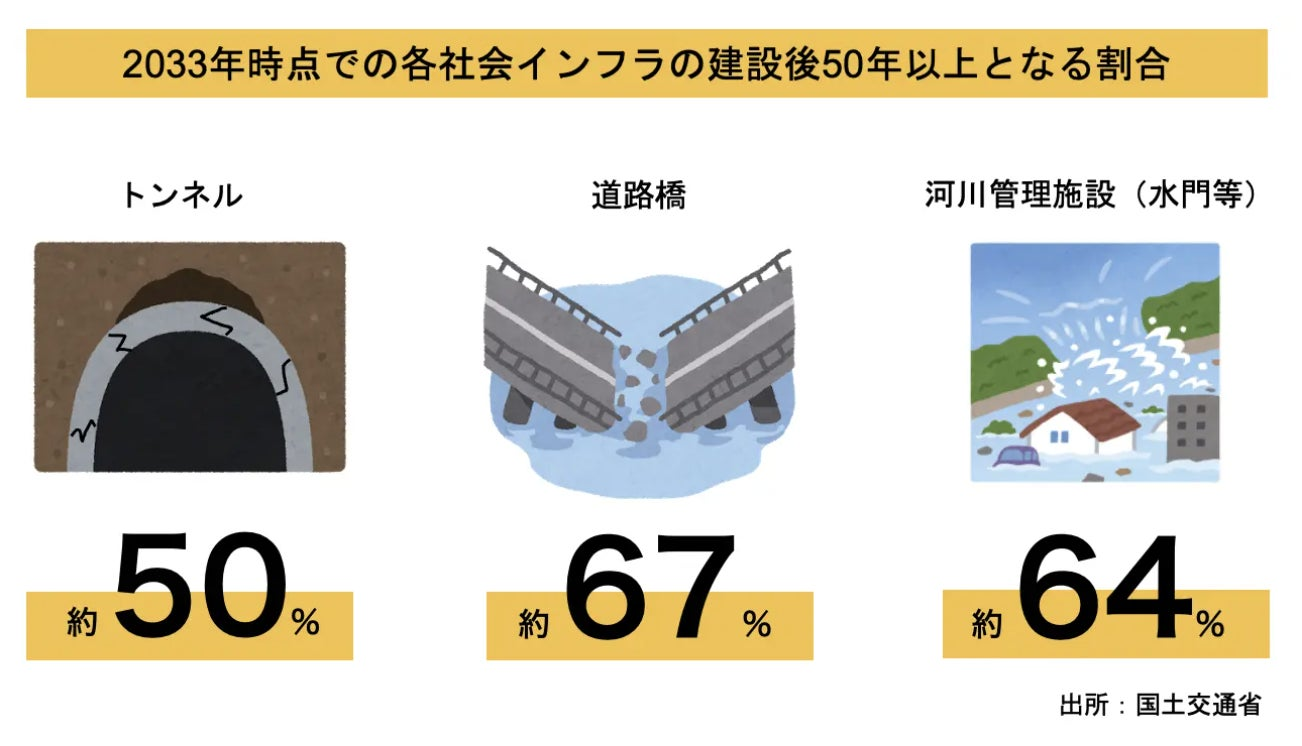
To break through this situation, in 2016 MLIT launched in earnest "i-Construction," a new project that incorporates ICT to improve productivity in the construction industry.
Since then, technology development has been carried out mainly by construction companies, and efforts and verification to streamline various processes in the construction industry are now under way.
Polyuse also believes that DX on actual construction sites is particularly important for improving the industry's productivity, and is developing construction 3D printers as ICT construction machinery.
Going forward, we will create site environments in which people can focus on the productive, high-priority work that only people can do on construction sites. By carrying out work in the so-called 3K domain, known as "kitsui, kiken, kitanai" (hard, dangerous and dirty), with construction 3D printers, robots and heavy machinery, we aim to achieve construction in which people and technology coexist, and will advance its implementation together with the national government, local governments and the construction industry.
- ■About Polyuse Inc.
Company name: Polyuse Inc.
Location: 2F, 2-2-15 Hamamatsucho, Minato-ku, Tokyo (development base in Kamakura City, Kanagawa Prefecture)
Representative Directors: Takuya Iwamoto / Wataru Ooka
Business: Planning, design, manufacture and sale of hardware, software and services specialized for the construction industry, centered on construction 3D printers
Founded: June 2019
URL: https://polyuse.xyz/
X (formerly Twitter): https://twitter.com/polyuse
[Inquiries regarding this release]
Polyuse Inc. Public Relations Department
URL: https://polyuse.xyz/
Email: info@polyuse.xyz