
Safe & reliable, made in Japan
The machine is a mass-produced unit we develop and build in Japan. Its dedicated materials are also made in Japanese factories, and tested and inspected to domestic construction standards.
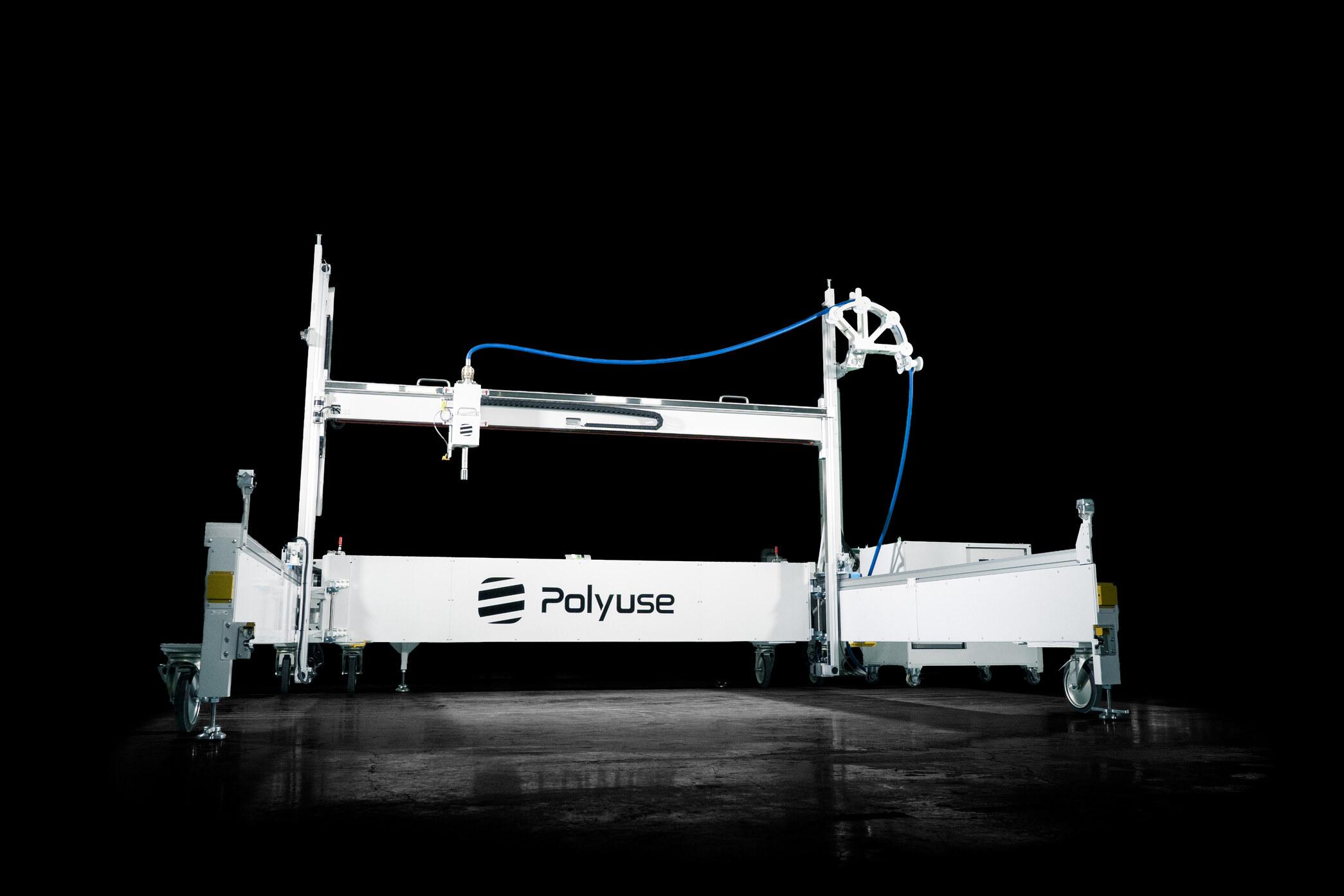
About Polyuse One
Projects completed
*As of June 2026
Work types covered
Public‑works share
*JSCE survey, Dec 2024
Patents
Material strength
*vs. standard concrete strength
Point 01
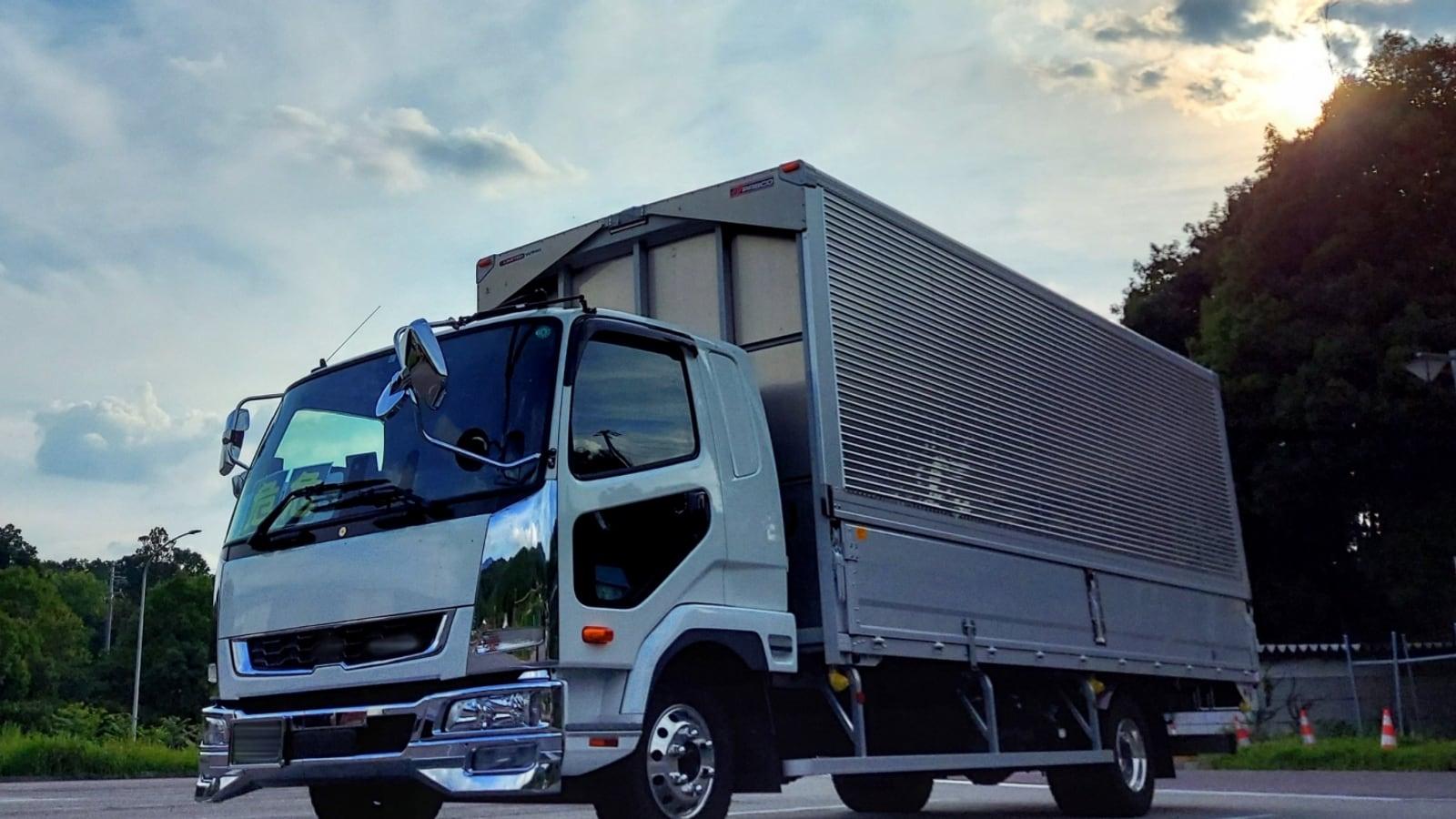
It folds down to fit on a standard 4‑ton truck, so it can be brought right up to the site. Folded, it also stores neatly in a warehouse, letting you scale its use up or down with demand.
Point 02
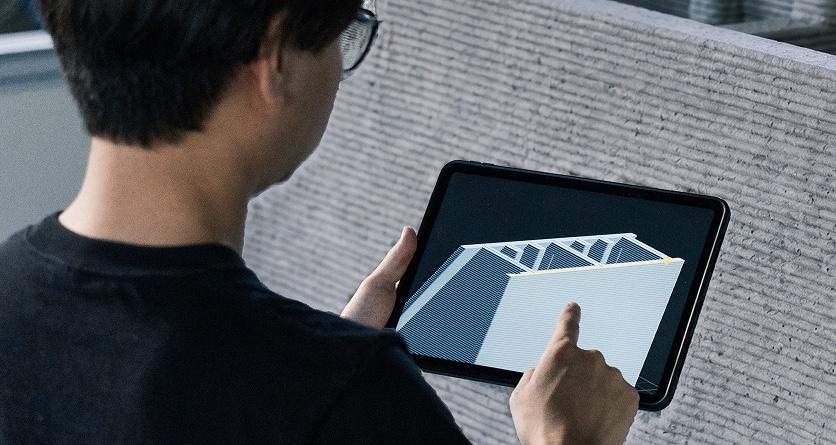
Three days of onboarding get your team running production on its own. After adoption, we keep guiding your training and provide a full range of support through the first year.
Point 03
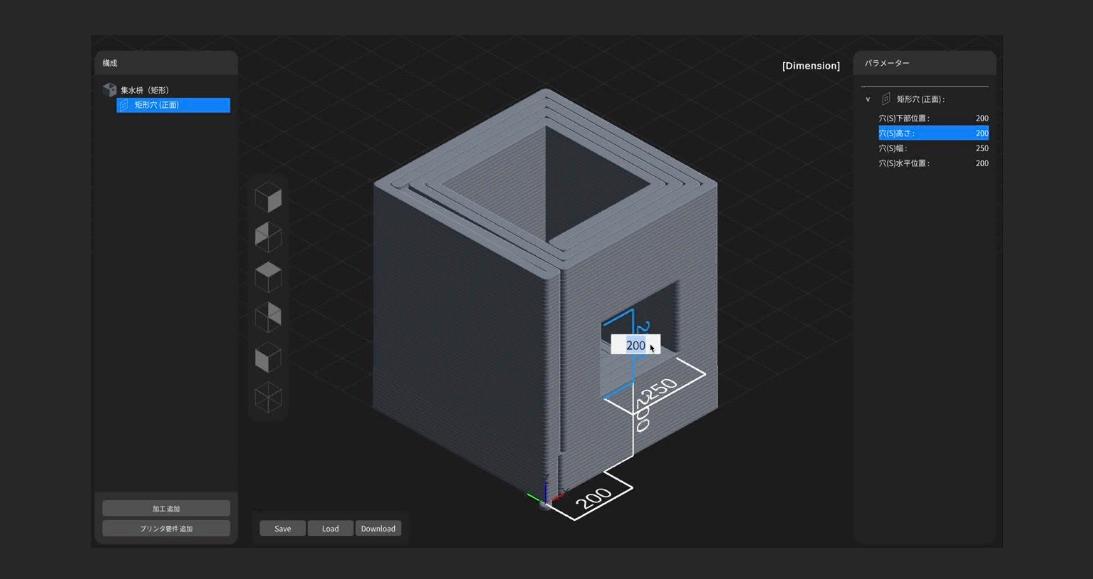
Along with freedom of shape, Polyuse supports your data creation, from data design to judging whether a print is fit for use, drawing on a track record of over 300 projects. Build with full confidence in quality.
Point 04
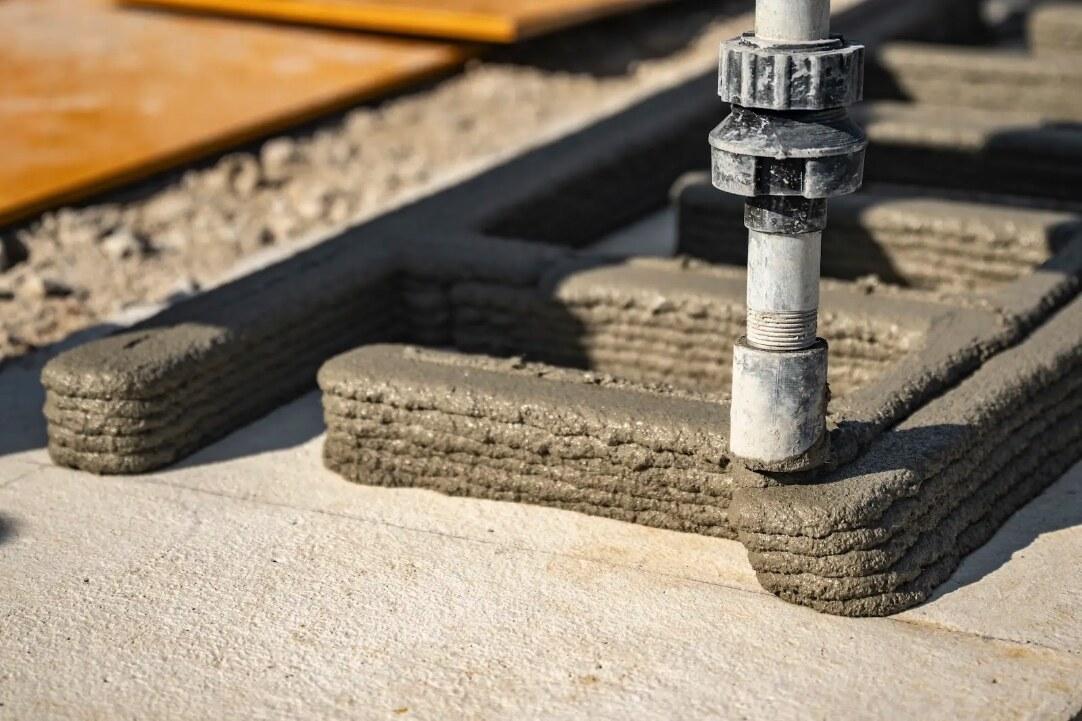
Clears the strength and durability standards that MLIT, prefectures and municipalities require for public works. Its track record extends beyond temporary works to permanent infrastructure.
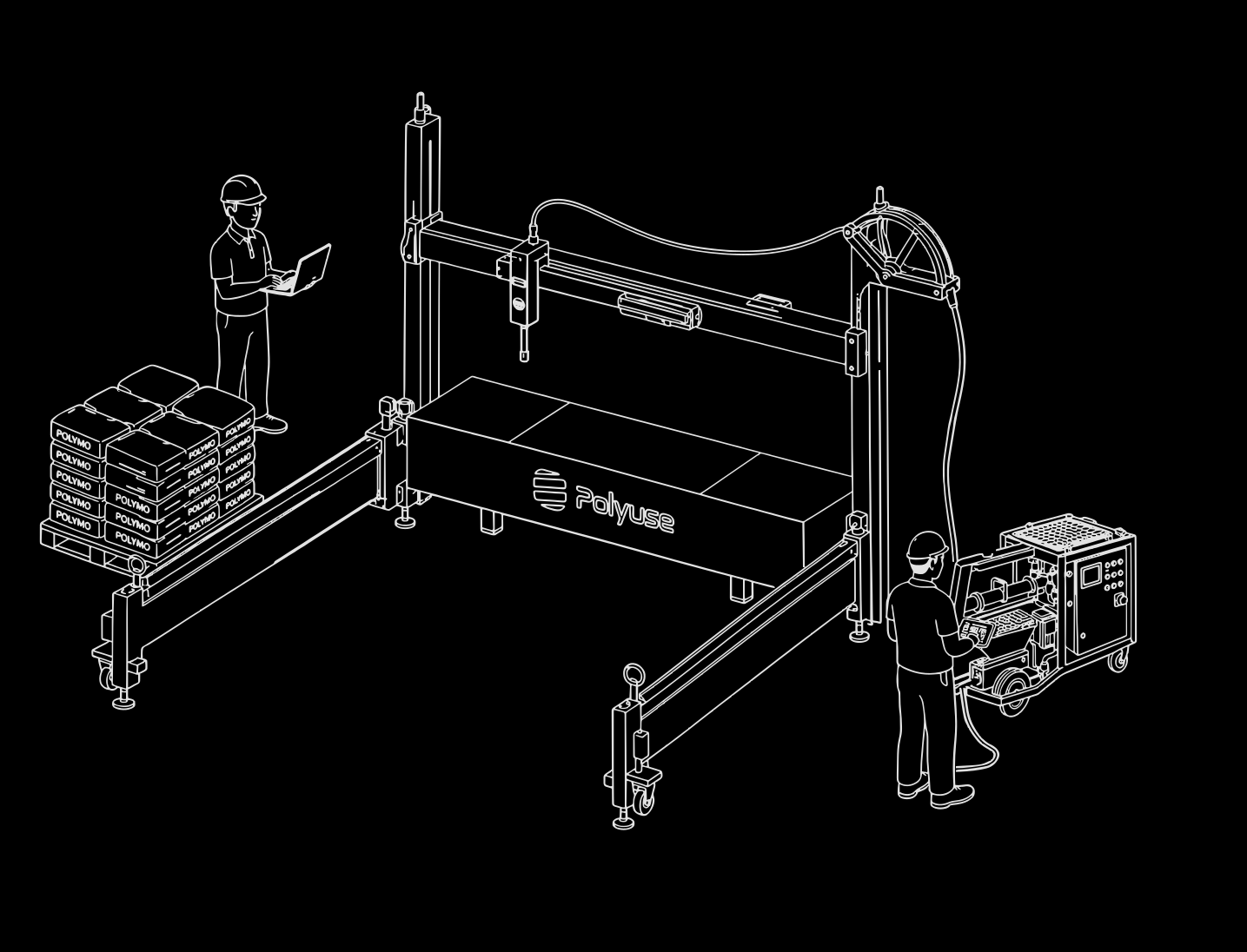
The machine is a mass-produced unit we develop and build in Japan. Its dedicated materials are also made in Japanese factories, and tested and inspected to domestic construction standards.
We work alongside you from before you adopt a construction 3D printer through to your plans after adoption. Each company gets a dedicated team that supports its own vision, planning and execution.
We lead more than 90% of 3D-printed public-works projects in Japan.
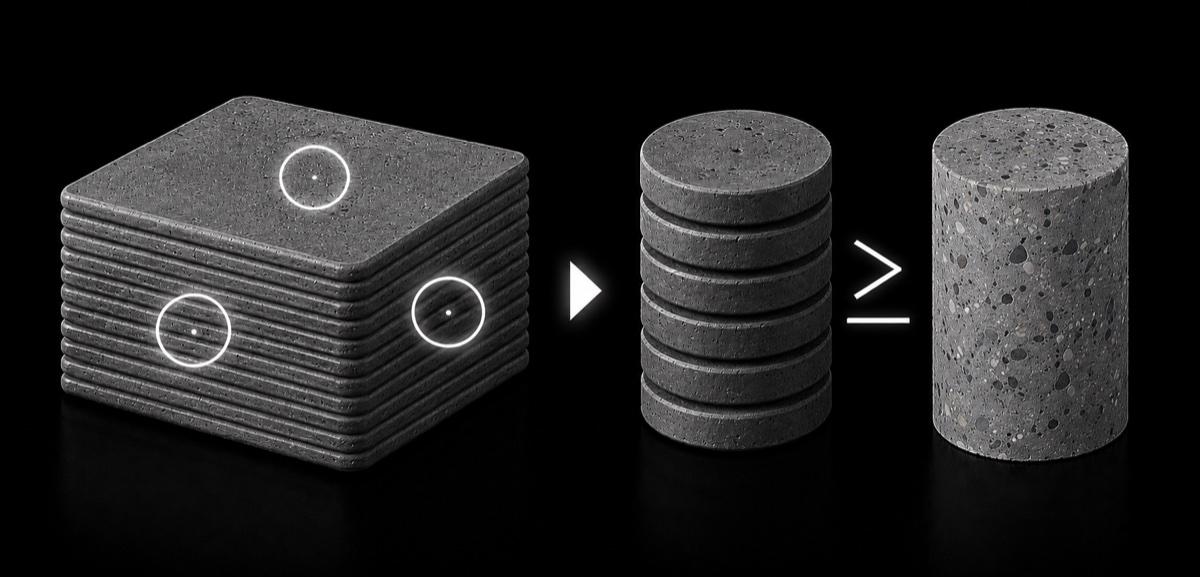
Compressive strength meets the level required of ordinary civil-engineering structures. Core specimens taken from printed pieces reached about 40 N/mm² or more at 28 days (under standard conditions).
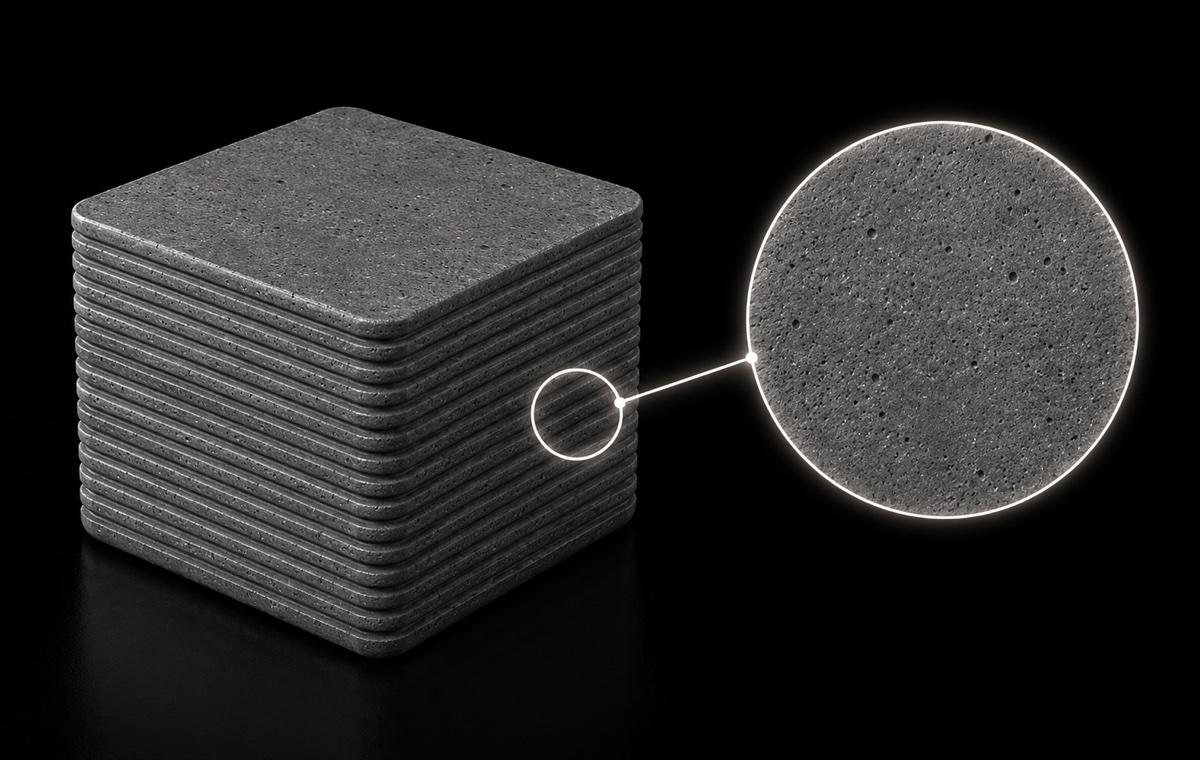
Although built up in layers, it forms a monolithic structure densely filled right to its core. Minimizing coarse voids helps secure both mechanical performance and durability.
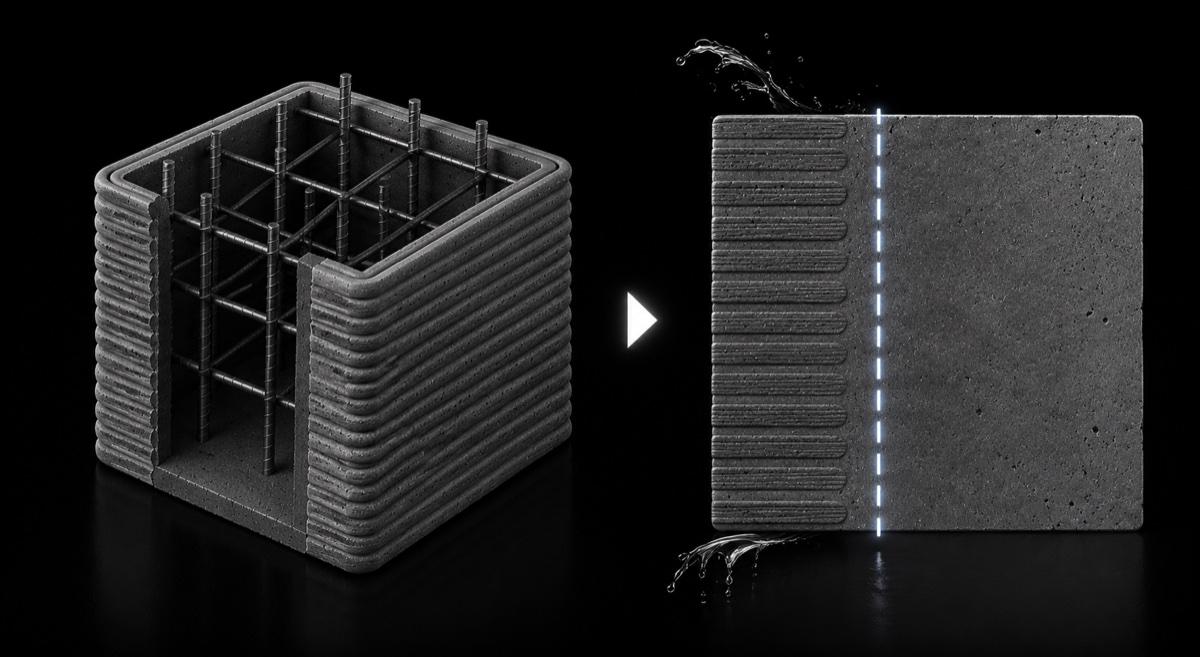
Used as stay-in-place formwork, it also bonds fully with the cast concrete, limiting moisture ingress at the interface and contributing to long-term durability.
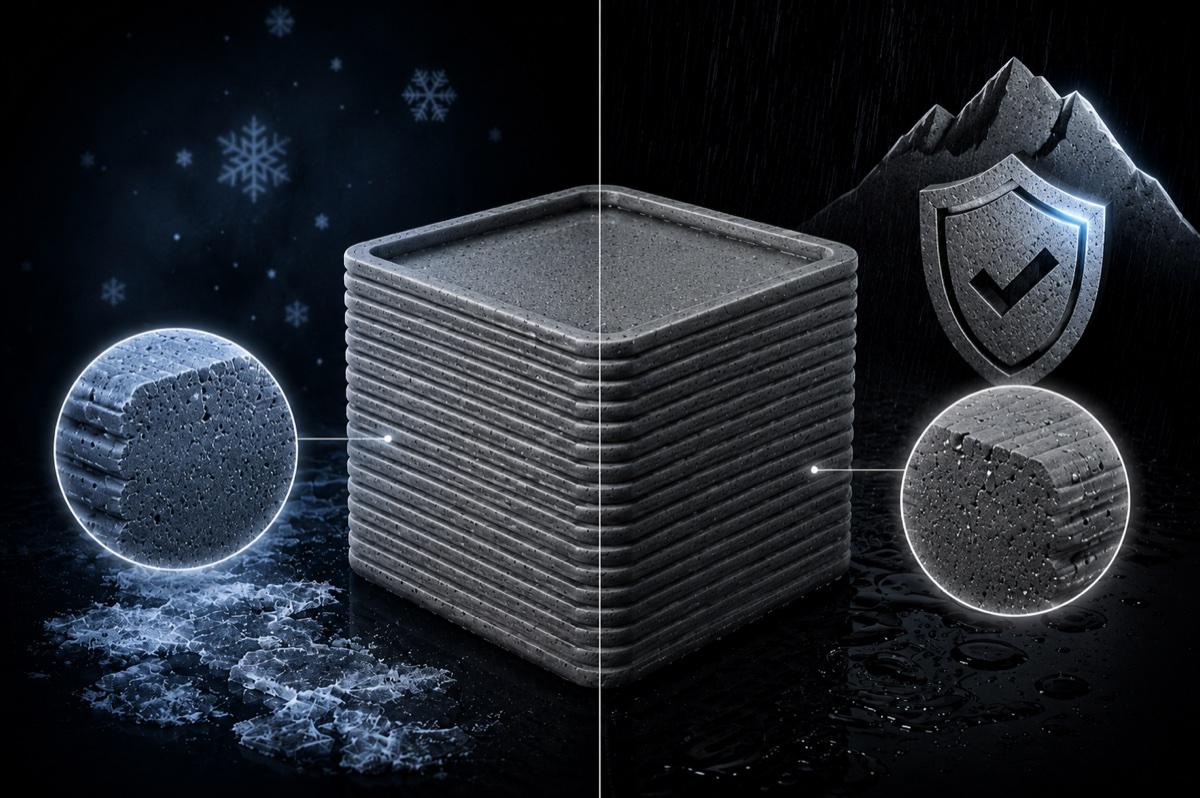
Performance holds up even in freeze-thaw environments. In testing it retained a high relative dynamic modulus of elasticity, confirming it can withstand medium- to long-term use.
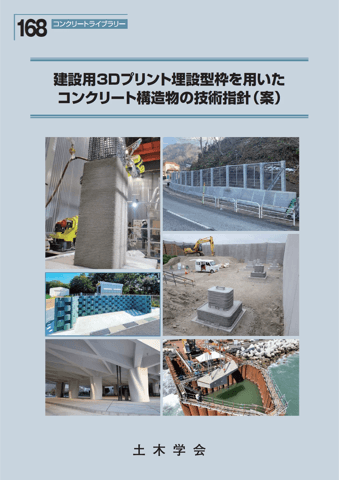
For structures built with construction 3D printers, the Japan Society of Civil Engineers (JSCE) has established technical guidelines covering design, construction, and maintenance. MLIT has also issued reference materials on verifying as-built dimensions and quality, along with cost-estimation standards for construction 3D printing, so frameworks for quality control and procurement on real projects are taking shape.
PR TIMES article
The MLIT Road Bureau's FY2025 New Technology Adoption Promotion Plan lists construction 3D printing among the new technologies to be promoted in the road sector. As public works take up new technologies, it is a field now moving into practical use on construction sites.
MLIT official site
This technology is registered in MLIT's New Technology Information System (NETIS). It qualifies as a new technology that can be proposed for use in public works, making it eligible for adoption and evaluation on actual projects.
NETIS official site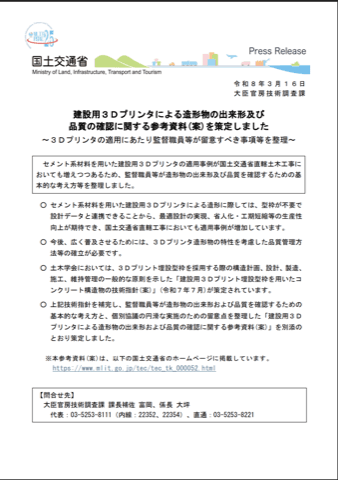
MLIT's Technology Research Division has published Reference Materials (Draft) on Verifying the As-Built Dimensions and Quality of Objects Produced by Construction 3D Printers (March 2026). Of the 14 MLIT-managed civil engineering projects cited as application examples in its appendix, 11 were built with Polyuse 3D printers, and the verification methods it sets out were compiled from that accumulated track record.
MLIT official site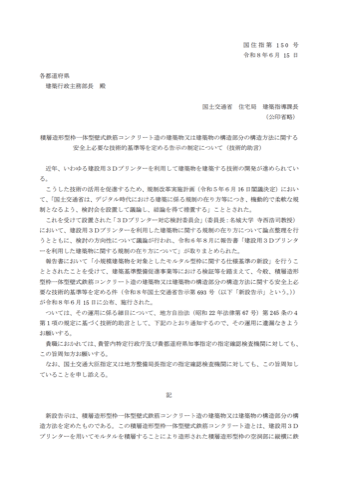
In June 2026, MLIT Notification No. 693 established standards for treating formwork produced by a 3D printer as a structural part of reinforced concrete construction, so buildings within a defined scale no longer need individual ministerial certification. Polyuse served as a cooperating member of the 3D Printer Response Study Committee, whose work laid the groundwork for the notification.
MLIT official site
The Technology Development Plan for Agricultural and Rural Infrastructure sets out the direction and concrete measures for the technology development needed to revitalize rural areas. Its aim is to promote practical, socially valuable technologies that help achieve the policy goals of the Long-Term Land Improvement Plan (approved by the Cabinet in September 2025). It covers the five years from FY2026 to FY2030.
MAFF official site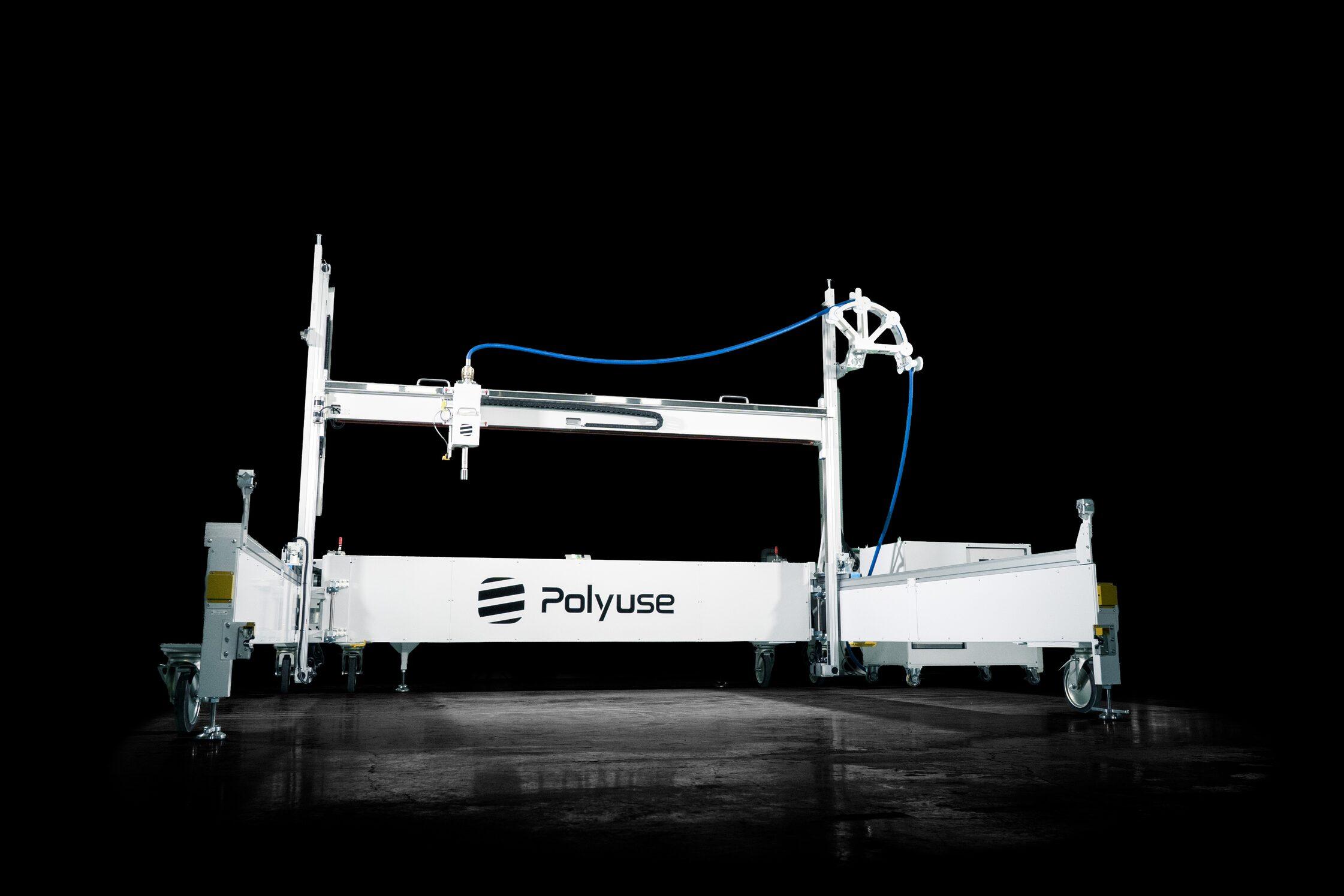
Feel free to reach out for details on Polyuse One or to discuss adopting it.
Ask about adopting Polyuse OneOur 3D printing materials develop far higher compressive strength than ordinary concrete. As for durability, we have confirmed across every relevant parameter that they perform on par with or better than ordinary concrete, and they are used in public works projects across Japan.
Manuals and instruction guides are available on each product page, which you can reach from the user-only page. We also publish video tutorials, so please make use of those as well.
Yes. We offer tours of our factory, exhibit at trade shows and hold live machine demonstrations. Please check the Events & News page for the latest schedule. A member of our team will be happy to walk you through everything, so please feel free to get in touch.
Quotes are free of charge. Please feel free to contact us via the inquiry form or by phone.