Polyuse Inc. (Head office: Minato-ku, Tokyo; Representative Directors: Takuya Iwamoto / Wataru Ooka; "Polyuse"), a developer of construction 3D printers, is pleased to announce that it has carried out construction in compliance with the Building Standards Act, based on a design by MAT First-Class Architect Office Co., Ltd. (Head office: Agatsuma District, Gunma Prefecture; Representative: Tomoyuki Tanaka; "MAT First-Class Architect Office").
This is the first building in Japan constructed with a 3D printer to have obtained building confirmation (according to Polyuse's own research).
*1 "Building confirmation" is the procedure by which a building's design, site layout and other plans are checked for compliance with the Building Standards Act and related laws by a prefectural or municipal building official (the officer responsible for building confirmation and related administrative work) or by a designated confirmation and inspection body.
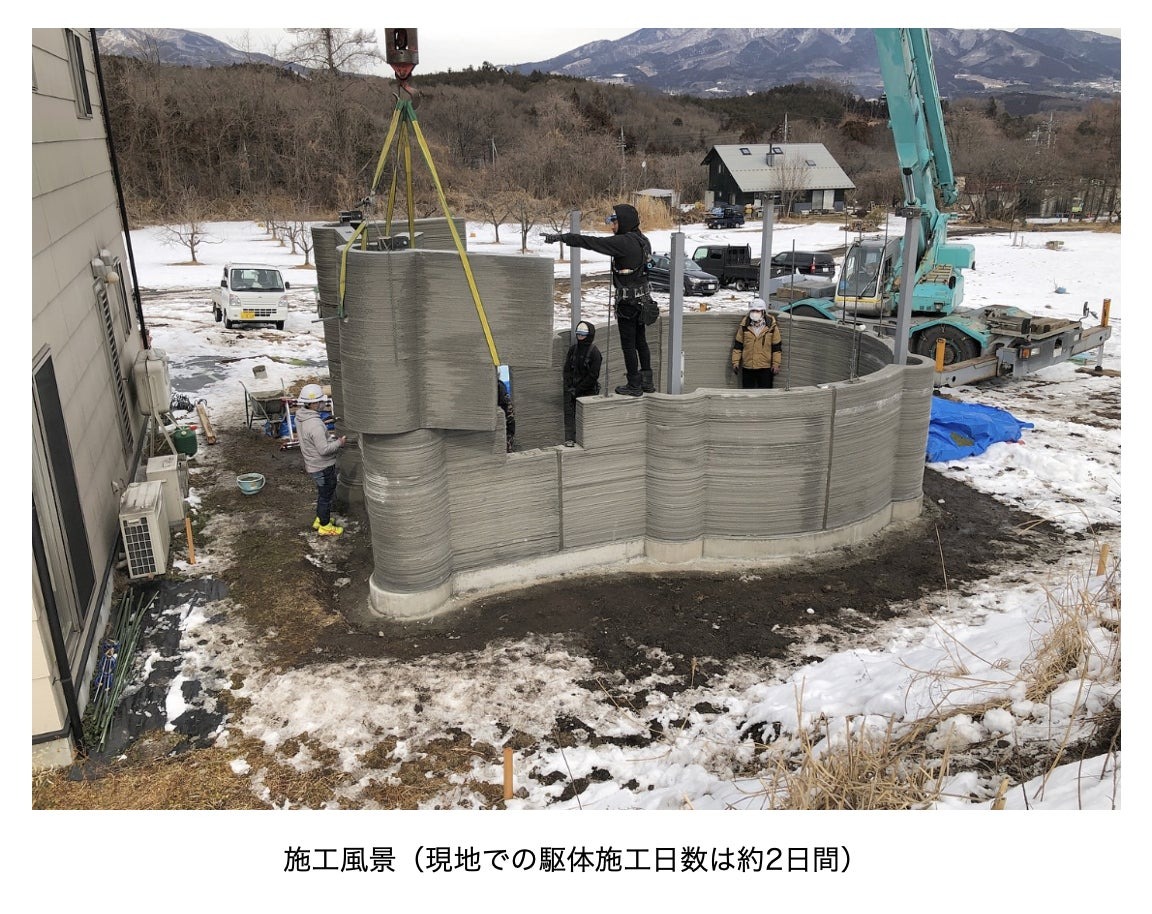
- Project overview
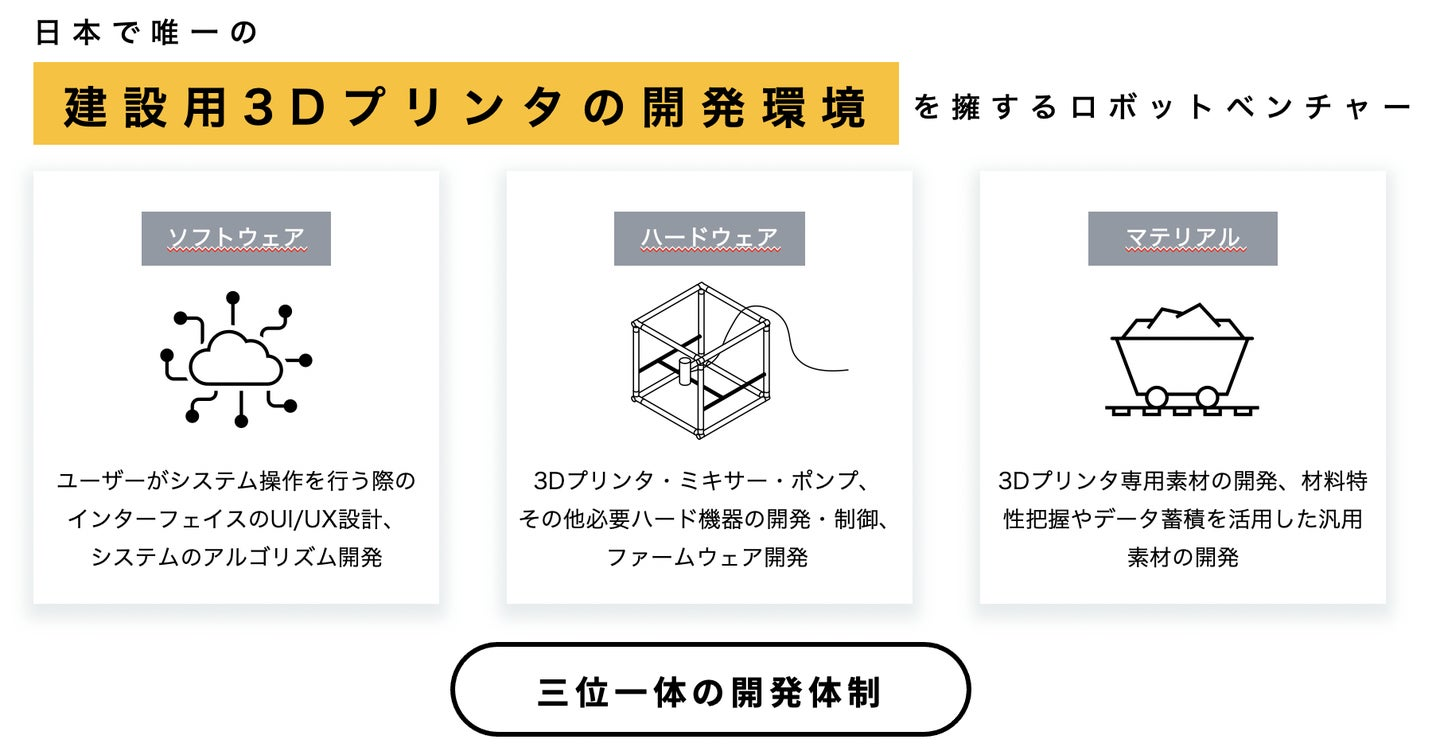
Founded in 2019, Polyuse has to date delivered Japan's first civil engineering structure in actual use and Japan's first application in an actual private-sector construction project, both in 2021. In December 2021, it also conducted Japan's first demonstration experiment involving industry, government and academia in the FY2020 Aki Bypass Terabun District Improvement Work (No. 4) for the Hiroshima National Highway Office of MLIT's Chugoku Regional Development Bureau. As the only construction 3D printer manufacturer in Japan, Polyuse has secured highly specialized engineers and built a development structure that allows it to lead the adoption of the technology in Japan, developing products that will help address the labor shortage expected in the construction industry in the future.
Construction 3D printers have been actively developed since around 2012, and overseas, buildings such as houses have already been constructed with them, putting other countries in the lead for many years. In Japan, however, the Building Standards Act sets standards to protect our lives from natural disasters such as earthquakes and typhoons, and how to build with construction 3D printers in a legally compliant way has long remained unproven.
Working with MAT First-Class Architect Office, Polyuse applied for building confirmation in Shibukawa City, Gunma Prefecture, obtained a certificate of confirmation from the city, and carried out the construction. MAT First-Class Architect Office handled the design and construction, and Polyuse produced the building components using a construction 3D printer. This is Japan's first successful case of constructing a building that has obtained building permission, and the first case in Japan to demonstrate and establish technology for adapting construction 3D-printed architecture, pioneered overseas, to Japan.
Polyuse will continue to accelerate the application of its technology at construction sites, with the goal of providing technology that becomes part of everyday practice in the construction industry. We will also help address the challenges facing construction 3D printers worldwide today, such as stable operation and the development of efficient construction methods, and contribute to construction sites as quickly as possible.
- Construction details
Construction was carried out in Shibukawa City, Gunma Prefecture, with components printed by a construction 3D printer manufactured in advance at a factory, then transported to the site and assembled.
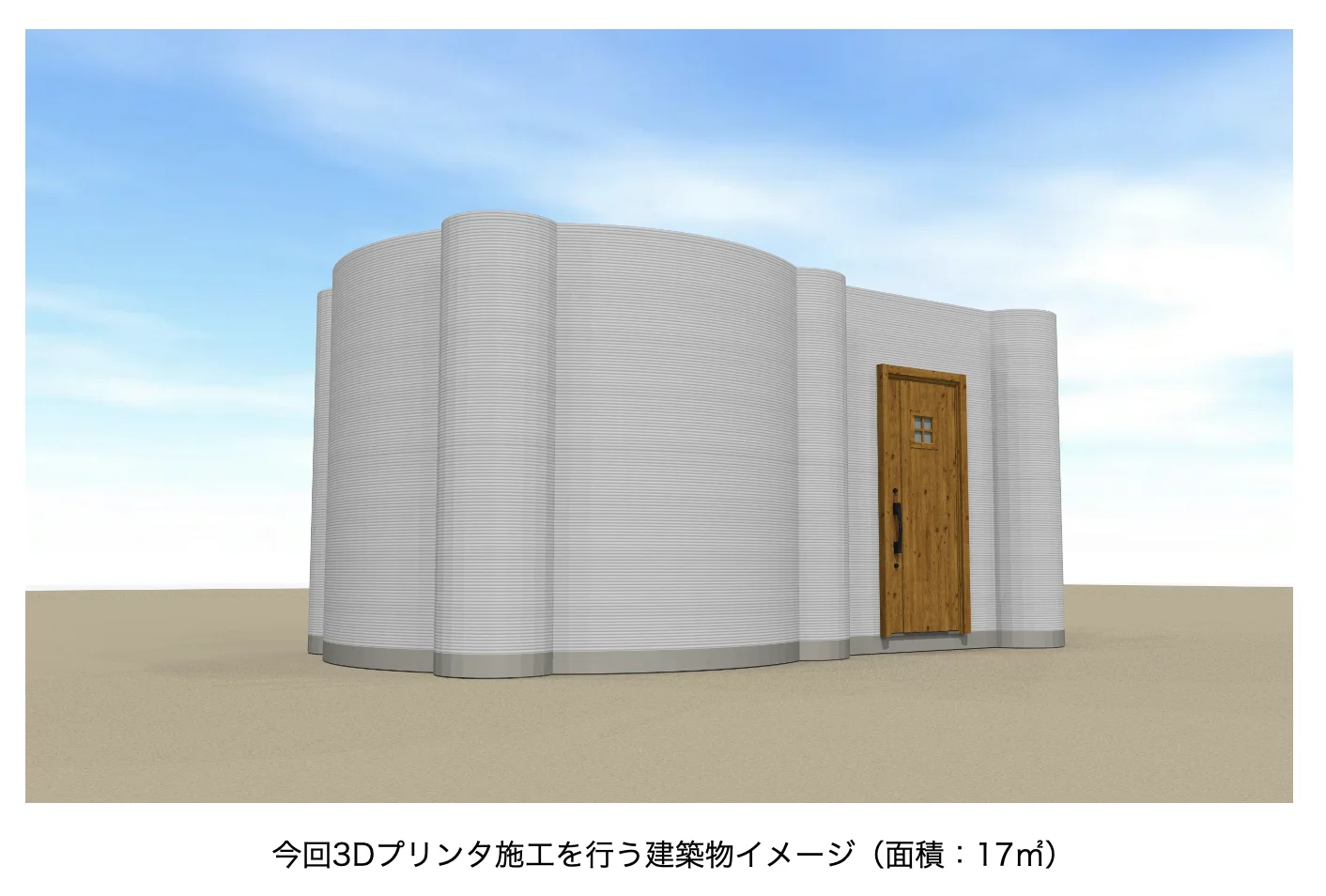
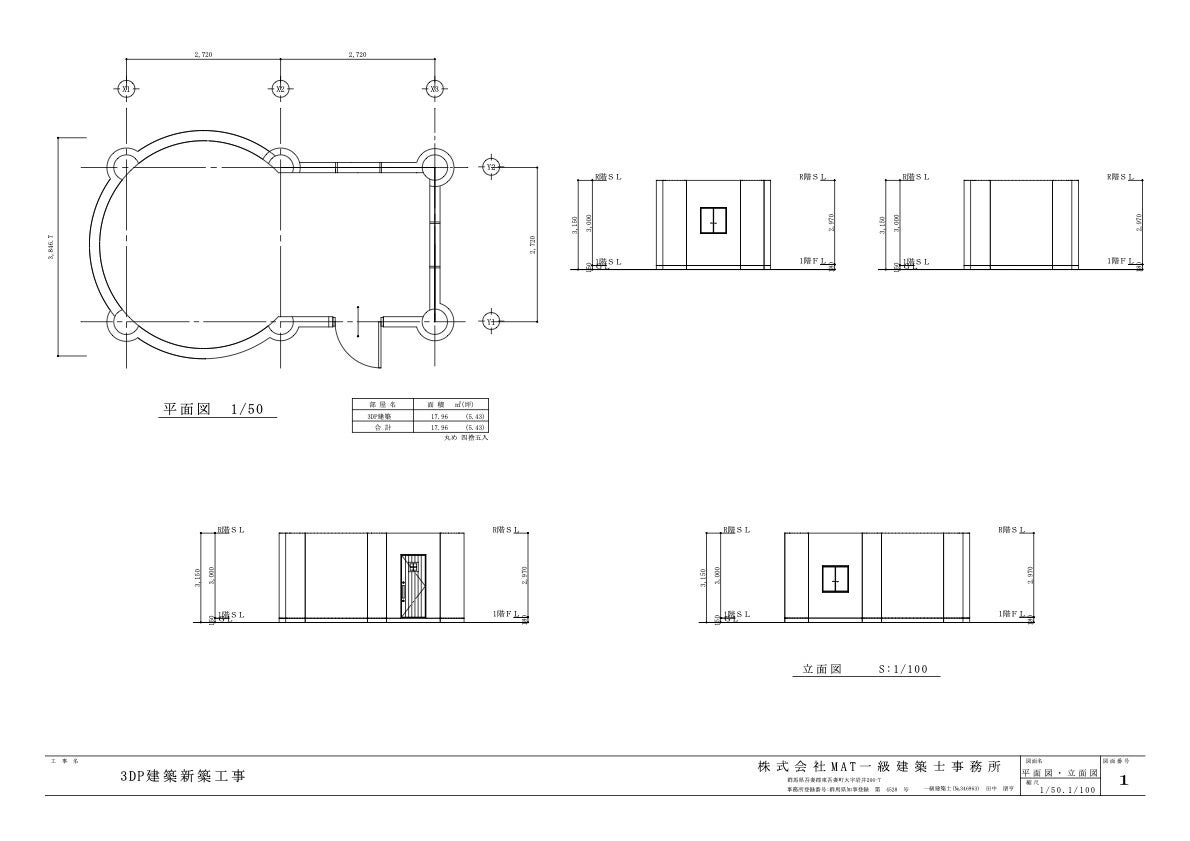
The printed structure consists of 12 building components, including curved (R-shaped) forms at which construction 3D printers excel, and is assembled on site. It is a single-story building about 6 m wide, about 3 to 4 m deep and about 3 m high. Rather than falling into the category of containers, unit houses and tiny houses of 10 m² or less, which have not required building confirmation*2, it offers more than 17 m² of space, enough room for the sanitary facilities and furnishings that are essential for everyday living.
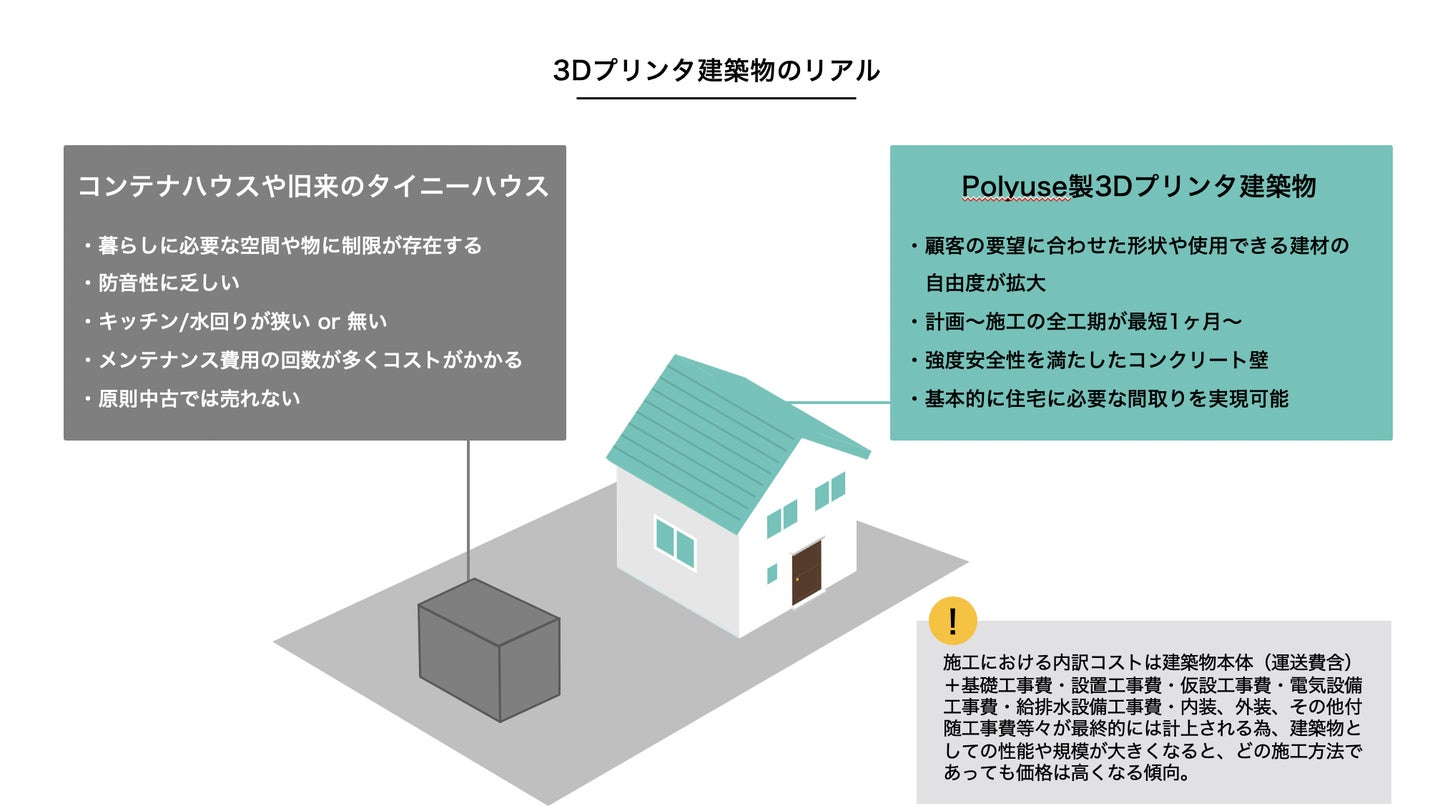
Building confirmation was therefore required, and it was issued by Shibukawa City on January 24.
*2 Although building confirmation is not required for buildings of 10 m² or less, such buildings must still meet building standards and take safety and comfort into account.
Polyuse will continue to actively carry out proper performance evaluations and share case studies of buildings constructed with construction 3D printers in Japan.
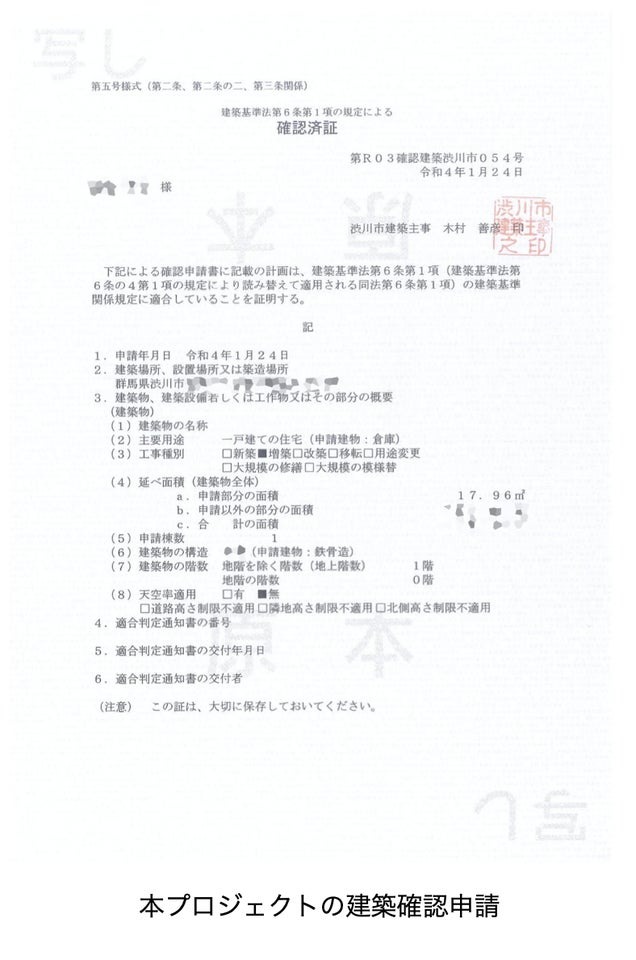
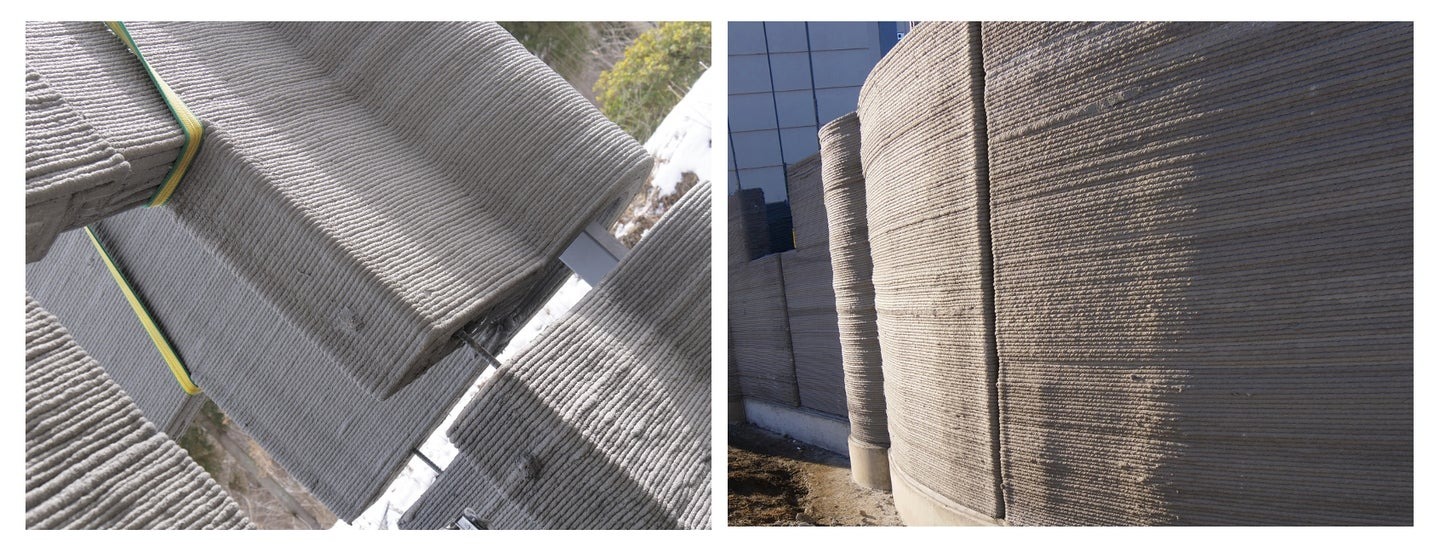
Each component is printed with its interior filled with the mortar material used, and printing in this filled state creates a dense structure that ensures sufficient strength. Strength tests have already been carried out several times, confirming that the components achieve strength above the standard strength applied to conventional concrete walls. As a result, while maintaining a level equal to or higher than that of standard concrete exterior walls, discussions proceeded without issue on the values obtained in the structural calculations performed to examine safety.
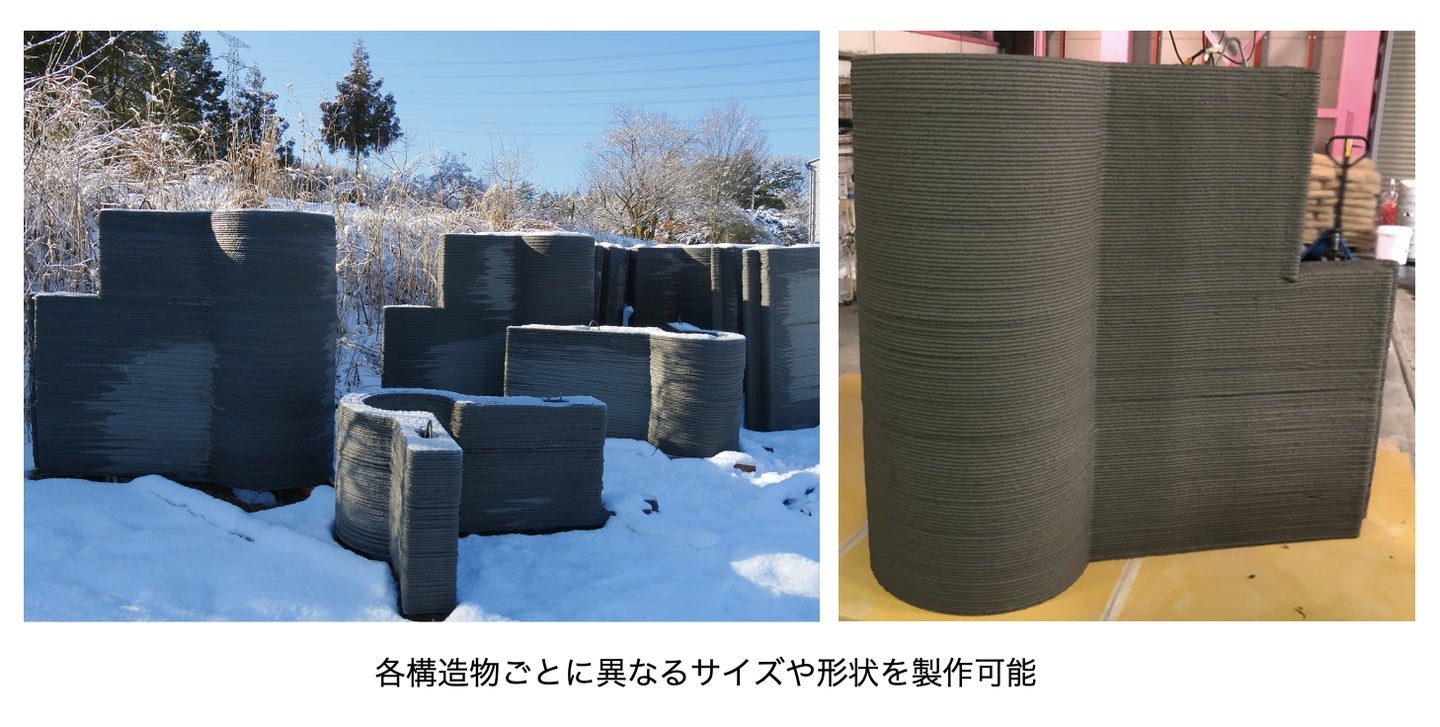
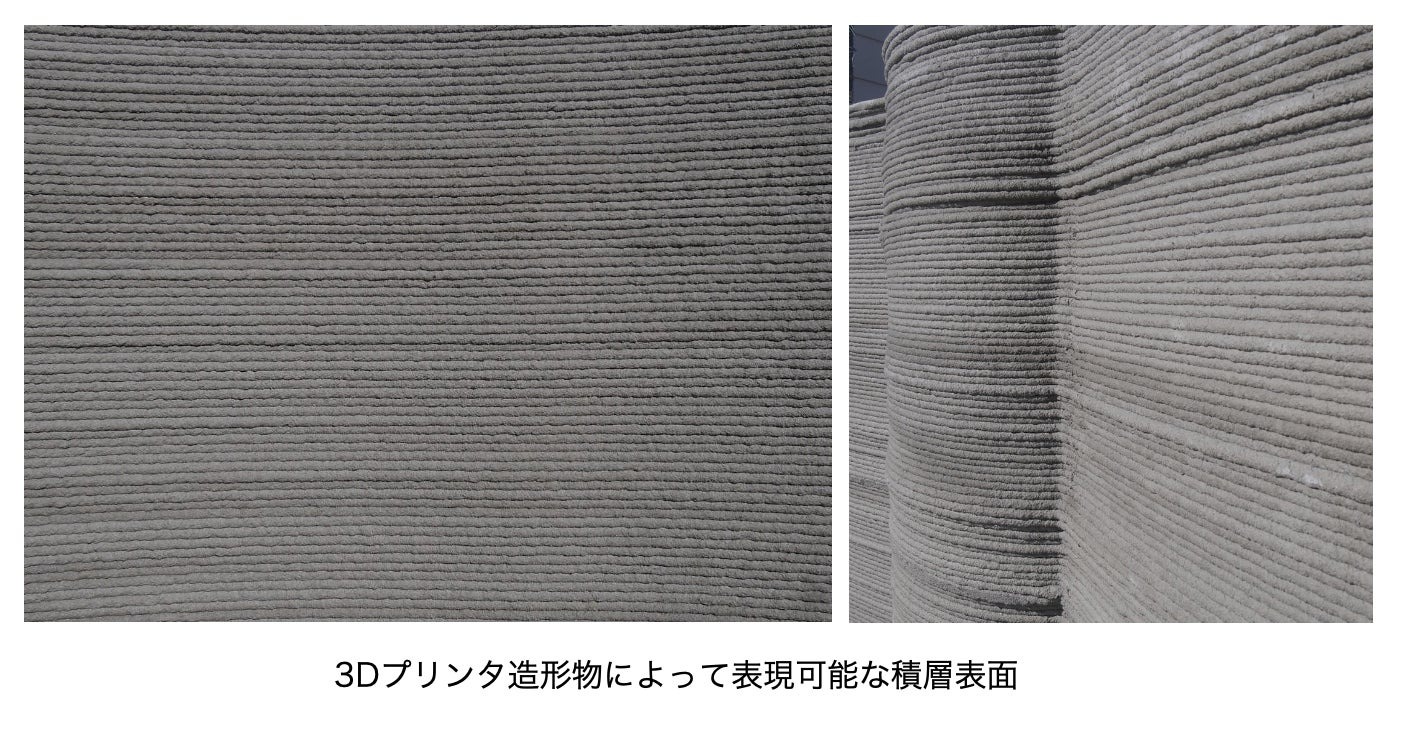
Printing a component up to 150 cm high with its interior filled takes roughly 4 to 6 hours, and manufacturing all the components takes about 10 days.
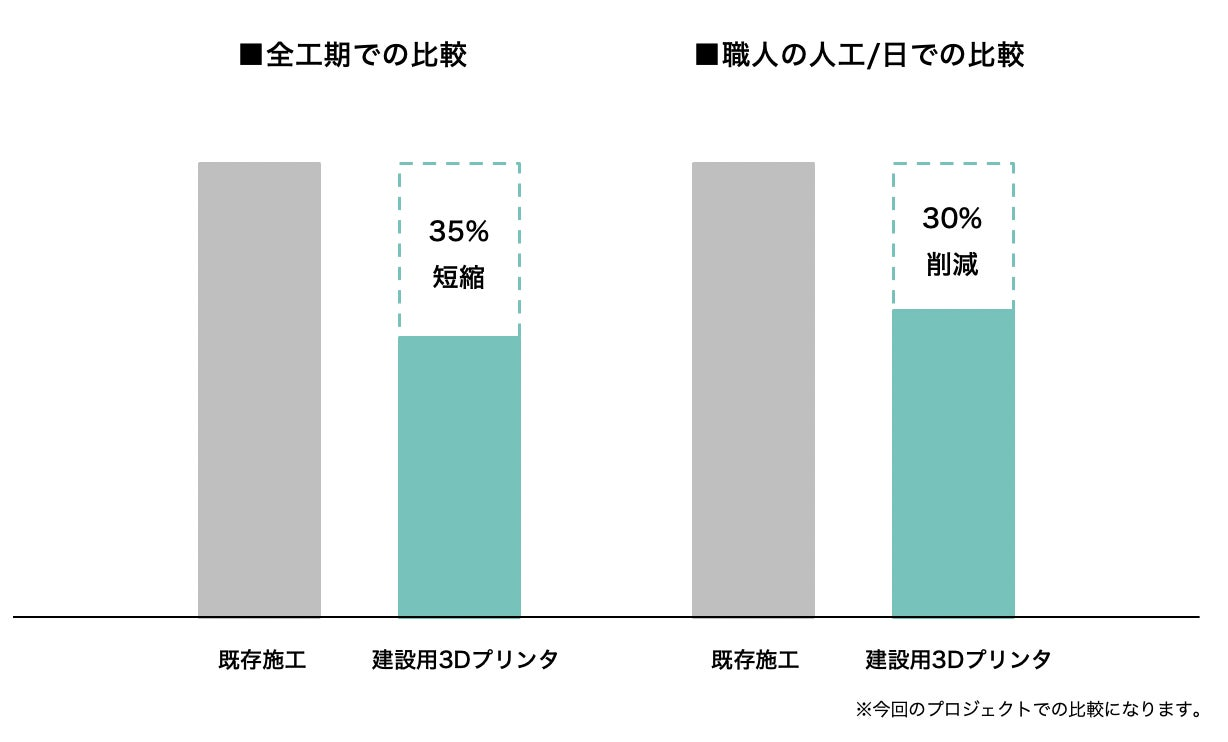
Construction can be carried out efficiently by pouring the foundation in parallel during the printing period. On-site assembly after printing was completed in two days, followed by installation of the roof and other elements and the interior finishing. A building that would conventionally take just over two months to construct can be built in about one month.
- Project background: why Polyuse is working to manufacture construction 3D printers in Japan and spread their use
Construction 3D printers have been under development since around 2012, mainly in Europe and the United States, and in Japan, too, there are high hopes for them both as a solution to the challenges facing the construction industry and as a construction technology of the future.
In Japan, a declining number of workers in the construction industry has been reported in recent years, including in statistics from MLIT and others, due to the effects of the declining birthrate and aging population and the diversification of occupations. In particular, the number of skilled tradespeople who carry out actual construction work is said to be set to fall by more than one-third within 10 years, making the labor shortage an urgent issue. While the workforce tends to be relatively young in urban areas such as the densely populated Tokyo metropolitan area, the shortage of workers is more pronounced in depopulated areas and other regions with few residents, where action is needed. As a way to make up for the shortage of engineers in such regions, the ability to use 3D drawing data so that anyone can quickly produce concrete structures whenever they are needed is expected to help maintain infrastructure in depopulated areas.
Construction 3D printers may also be used to rapidly supply housing and special components in the event of disasters, which have been increasing in recent years. People often live in temporary housing for several years after a disaster, so disaster response needs to go beyond conventional prefabricated units and consider living comfort. With housing built using construction 3D printers, homes of different sizes that take family composition and other factors into account can be provided quickly simply by changing the data as needed. In civil engineering work during reconstruction, too, combining the technology with 3D scanners and other tools has the potential to quickly supply shapes that would otherwise be difficult to manufacture in a short time.
A verification project covering the above was also carried out under MLIT's PRISM program.
https://prtimes.jp/main/html/rd/p/000000008.000049711.html
From the perspective of enriching our lives, we believe construction 3D printers make it easier to produce curved shapes and other forms that tend to be costly to produce as concrete structures, and that making previously difficult shapes possible will help broaden architects' creativity and bring residents greater diversity in housing tailored to each individual. Freedom of form also makes it possible to supply components that strip away structurally unnecessary parts and use only the minimum material required, and the technology is expected to serve as a way to use limited resources more sustainably.
- The significance of this project from the perspective of Professor Tetsuya Ishida, Faculty of Engineering, The University of Tokyo
We received comments from Tetsuya Ishida, Professor at the Graduate School of Engineering, The University of Tokyo, on the significance of this project and of construction 3D printers from the perspective of the construction industry and concrete engineering.
Research on construction 3D printers using concrete has been led by other countries, such as those in Europe, as well as China and Singapore, and their application to buildings, bridges and other structures is already being tested. 3D printing technology, which is completely different from the conventional construction method of making formwork, filling it with concrete and curing it until it hardens, has great potential to transform the construction industry. Many benefits have been pointed out, including the ability to create complex shapes that were previously difficult to make (a high degree of freedom in form), and the ability to save labor and automate construction by combining it with robotics and information technology. However, when building infrastructure such as buildings and bridges in Japan, an earthquake-prone country, sufficient seismic resistance, safety and durability must be achieved, so there are many issues to resolve, and vigorous efforts are being made toward practical application.
It is highly significant that a residential building compliant with the Building Standards Act has now been realized in Japan using a domestically made construction 3D printer. I hope that pioneering cases such as this will serve as a stimulus, and that many researchers and engineers will compete with and learn from one another, energizing the race to develop construction 3D printing technology in Japan.
- From the project team
■Comment from Tomoyuki Tanaka, Representative Director, MAT First-Class Architect Office
The number of buildings constructed using 3D printers is growing overseas. Their use is also anticipated in Japan, but under the Building Standards Act, building with 3D printers has been considered difficult here. However, through repeated discussions with Polyuse, we have obtained Japan's first building permission for a building constructed with a 3D printer. I hope this will serve as a stepping stone to spark active discussion of building with 3D printers in Japan's architecture industry and bring new energy to the industry.
In addition, because there are many regulations governing the construction of buildings in Japan, overseas examples of 3D-printed buildings cannot easily be transposed to Japan for comparison. However, it is precisely because of these many regulations that Japanese buildings maintain some of the highest levels of safety in the world.
This 3D-printed building is a first step toward use in housing, but many challenges remain. For example, there is still much that must be verified in practice, including environmental performance, energy efficiency, and safety from every angle and in every scenario.
For the development of 3D-printed architecture in Japan, we want to conduct experiments and verification using this building and prove that it can deliver energy-saving performance and safety on a par with conventional construction methods.
■Comment from Takuya Iwamoto, Representative Director, Polyuse
We are proud to have succeeded in constructing Japan's first building with building permission.
In FY2021, Polyuse has been applying the technologies it has developed so far to actual sites and identifying challenges. As part of this, following its application to civil engineering work, we have also applied the technology to building construction to identify challenges and requirements for future development.
This time, with the cooperation of Mr. Tanaka of MAT First-Class Architect Office, we were able to carry out actual construction and repeated verification.
There are still many challenges to overcome before the technology is widely used in practice in Japan, but we will continue to resolve them quickly, as we have done so far, and together with MAT First-Class Architect Office and the other partner companies that have supported us, we aim to deliver our machines to actual sites as soon as possible.
■Comment from Taiyo Kamata, Project Leader, Polyuse (Ph.D. in Engineering)
Unlike the method of building formwork on site and pouring concrete around a network of rebar to create components, this project took the approach of transporting components fabricated in a factory to the site and assembling them. 3D printer construction generally does not use formwork, and at this site we were able to transport multiple optimized components from the factory to the site, manufacturing and delivering them in a short period.
For the development team, this project was very different in character from what we had printed before, and we often struggled with the performance limits of the concrete 3D printer system we had been developing. In particular, because we had to produce many tall components with complex shapes, we had to address performance limits in our printer system such as "continuous operating time," "printing in winter conditions" and "managing mortar material over long periods." Having done so, I feel even more strongly that we can be a real help to the construction industry. We will continue our discussions with partner companies and press ahead with development.
■About Polyuse Inc.
Company name: Polyuse Inc.
Location: 2F, 2-2-15 Hamamatsucho, Minato-ku, Tokyo (development base in Kamakura City, Kanagawa Prefecture)
Representative Directors: Takuya Iwamoto / Wataru Ooka
Business: Planning, design, manufacturing and sales of hardware, software and services specialized for the construction industry, centered on construction 3D printers
Founded: June 2019
URL: https://polyuse.xyz/
[Media inquiries regarding this release]
Polyuse Inc. Public Relations Department
Email: info@polyuse.xyz