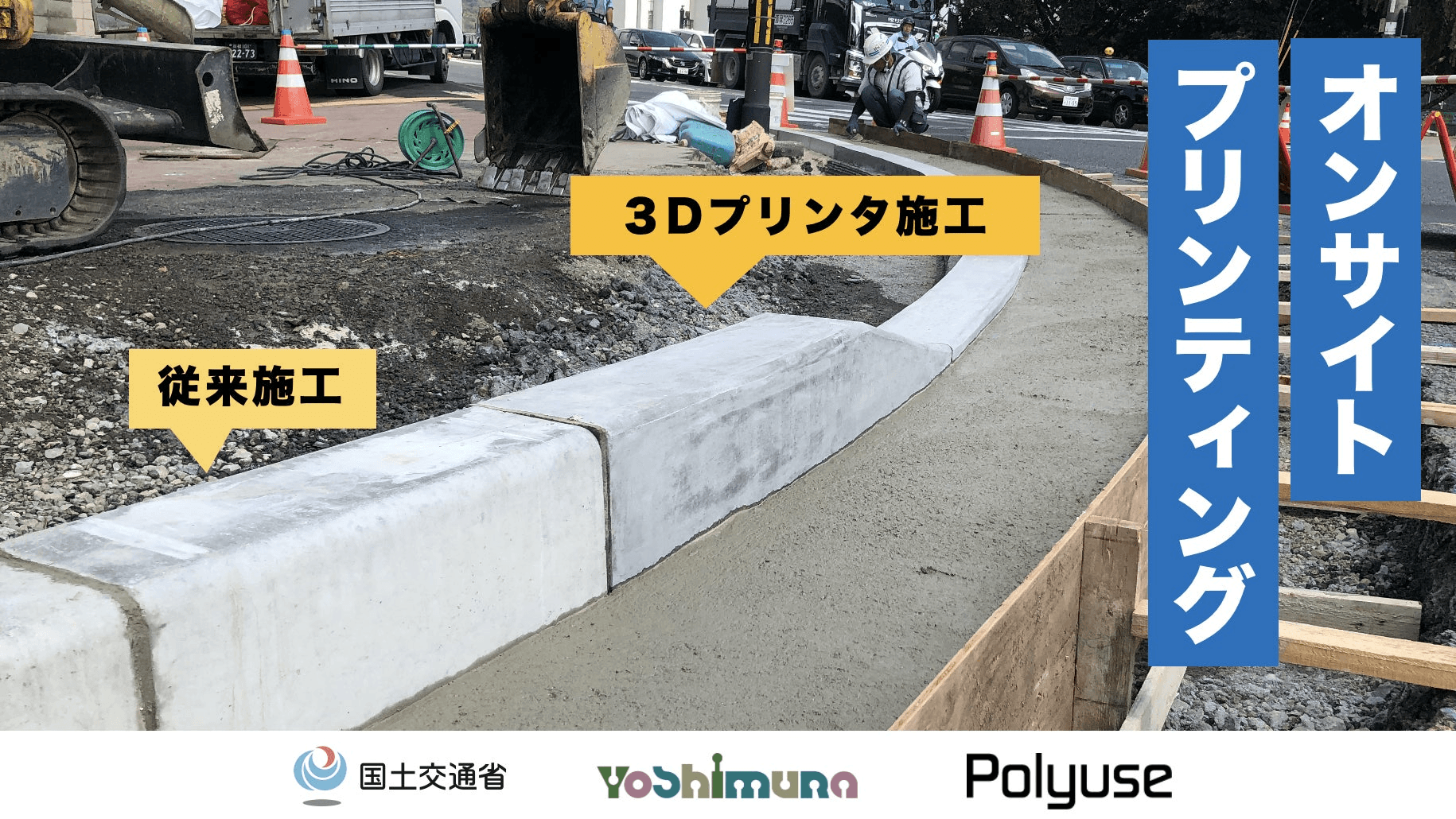
In the National Route 24 Kawaramachi Jujo Intersection Cable Utility Tunnel Work (client: Kinki Regional Development Bureau, MLIT), Polyuse Inc. (Head office: Minato-ku, Tokyo; Representative Directors: Takuya Iwamoto / Wataru Ooka; "Polyuse"), a developer of construction 3D printers, together with Yoshimura Construction Industries Co., Ltd. (Head office: Nakagyo Ward, Kyoto City; Representative Director: Ryoichi Yoshimura; "Yoshimura Construction Industries"), became the first in Japan to successfully print a civil engineering structure for public works directly on site with a 3D printer, within a work zone occupying a national highway, shortening the on-site construction period.
- Overview of the public works project using a 3D printer
In the National Route 24 Kawaramachi Jujo Intersection Cable Utility Tunnel Work, a construction 3D printer developed by Polyuse was set up inside the excavated space for the curved sidewalk-roadway boundary blocks (curb members) at the intersection, and the blocks were printed directly at the construction location. Because the sidewalk-roadway boundary blocks in this project follow a long, continuous curve, members optimized for the site had to be manufactured. This project is also the first public works project using a construction 3D printer within the jurisdiction of the Kinki Regional Development Bureau of MLIT.
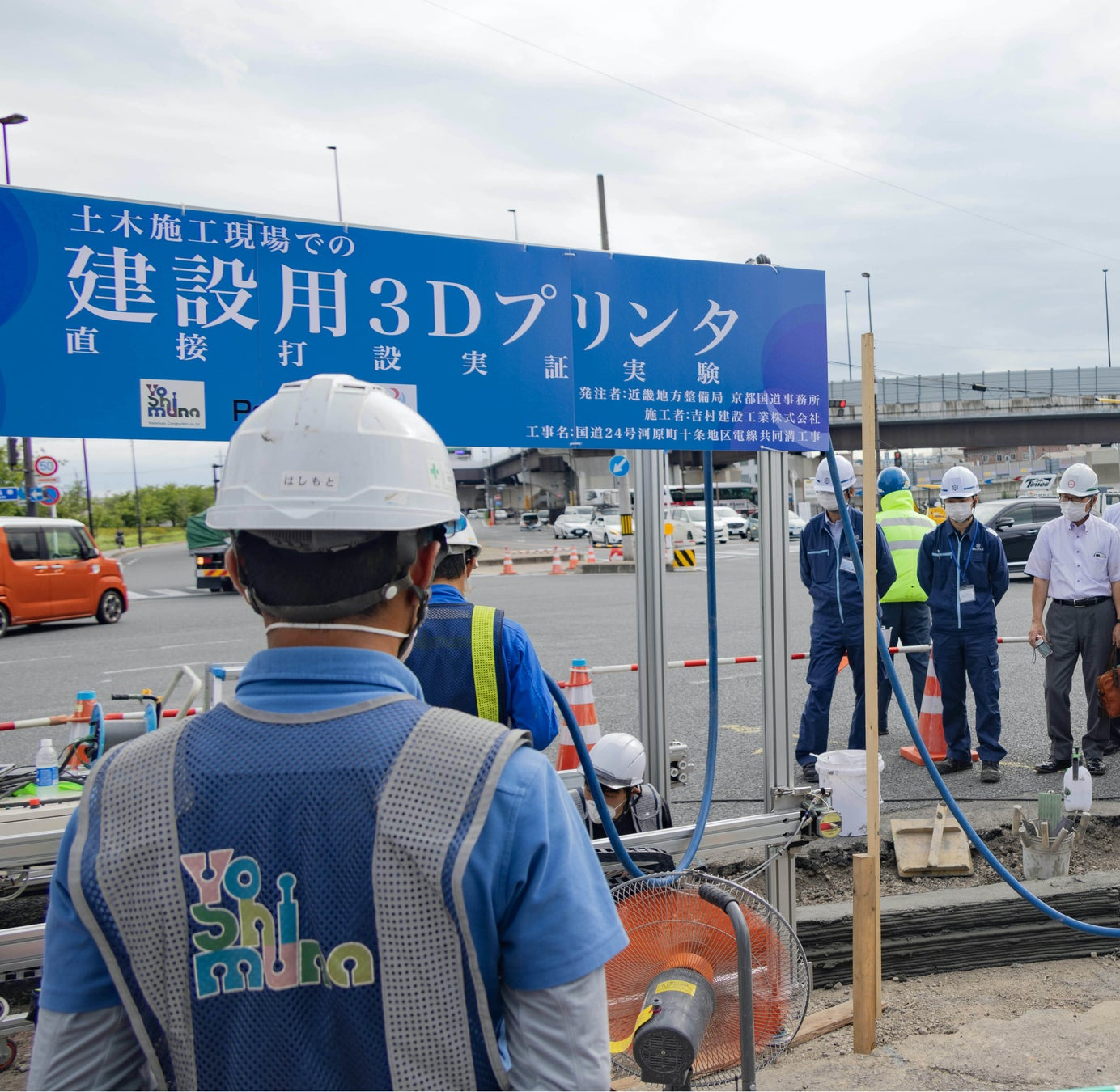
Under the construction management of Yoshimura Construction Industries, 3D printer construction was carried out safely with due consideration for the surrounding environment and road traffic
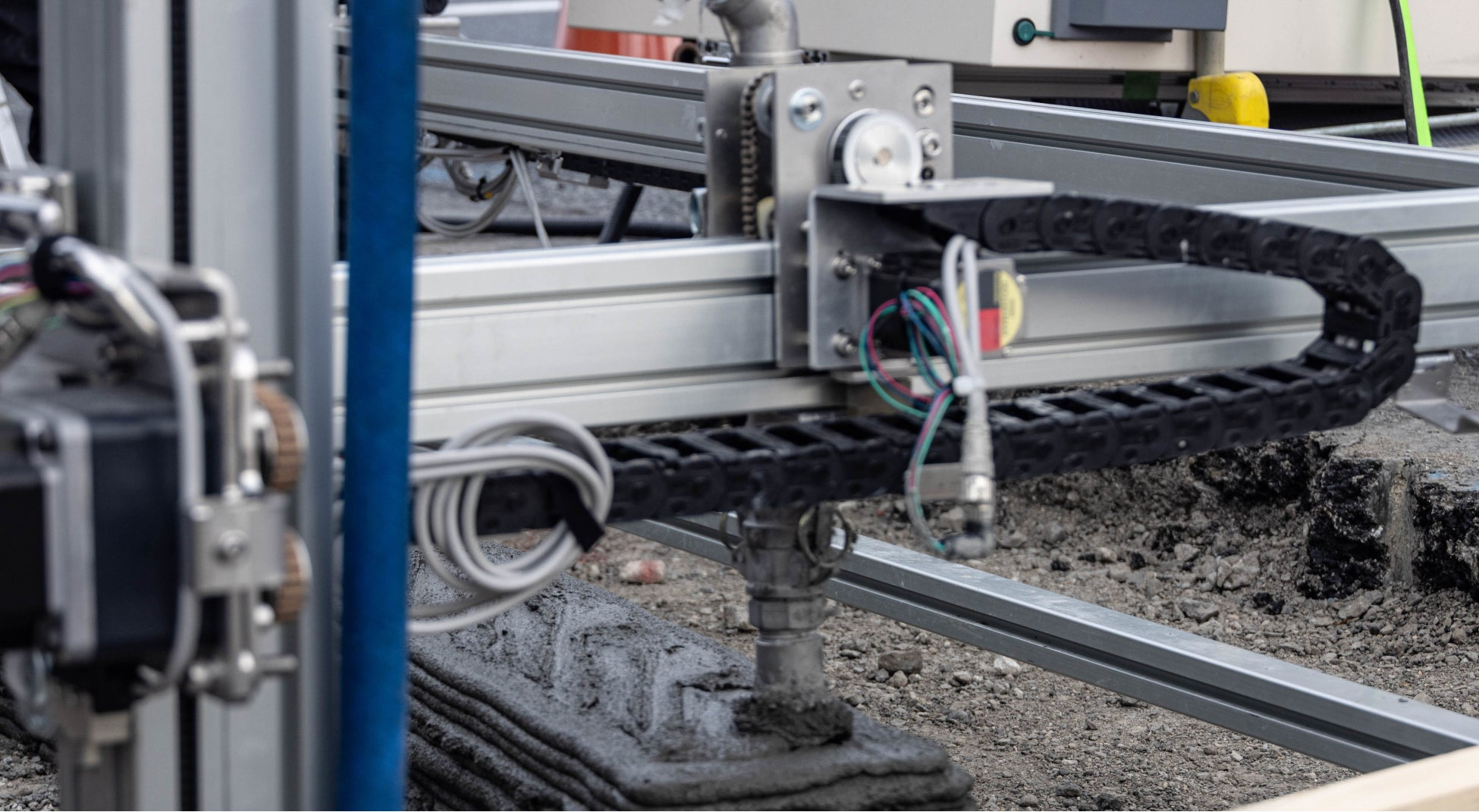
The 3D printer was installed on site to print the structure directly
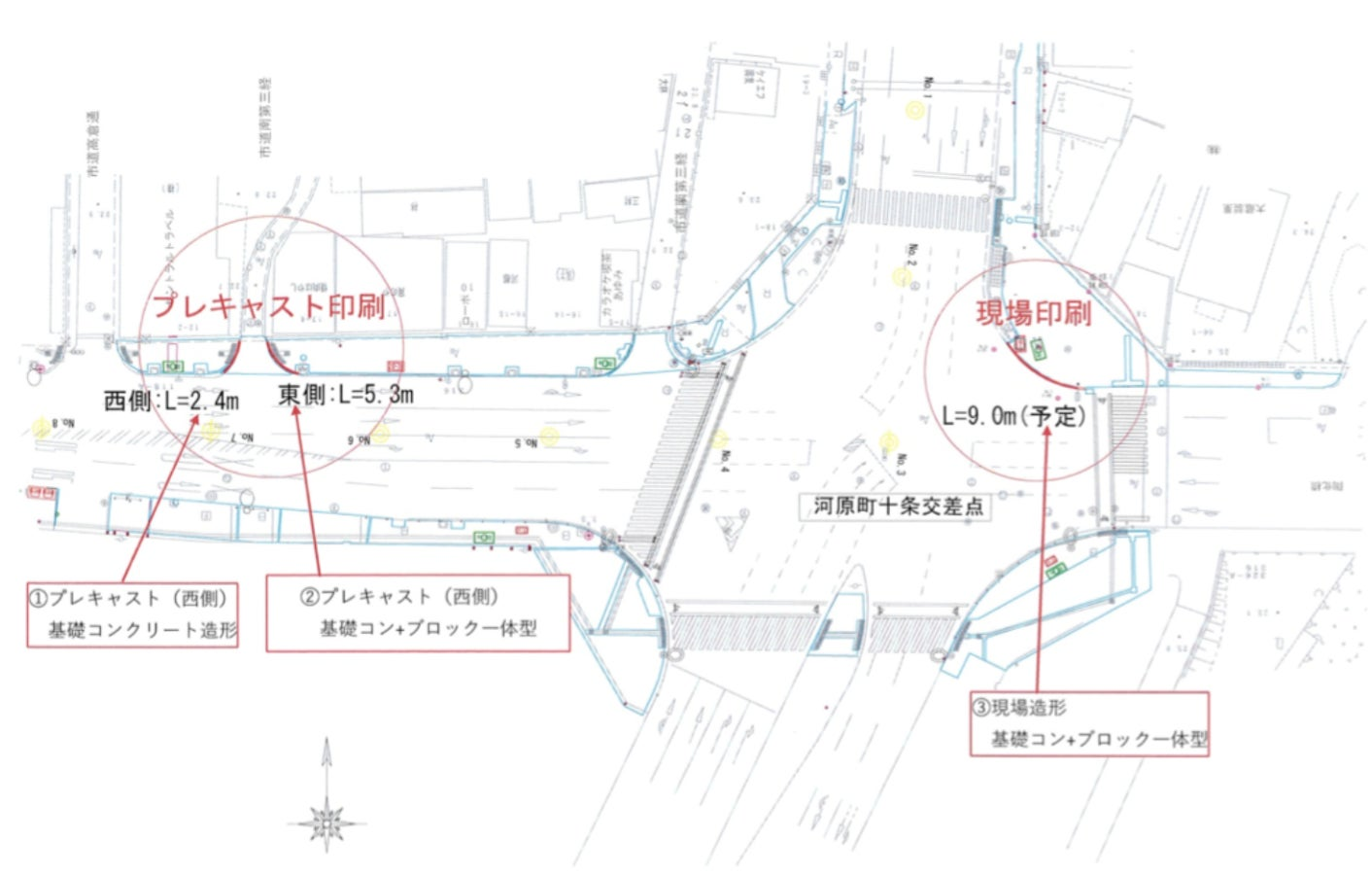
A construction 3D printer was used for printing at the locations where arc-shaped curbs were to be installed
In addition to on-site printing (cast-in-place construction), precast construction (printed in advance at our manufacturing facility) was also used, for a total of three construction locations
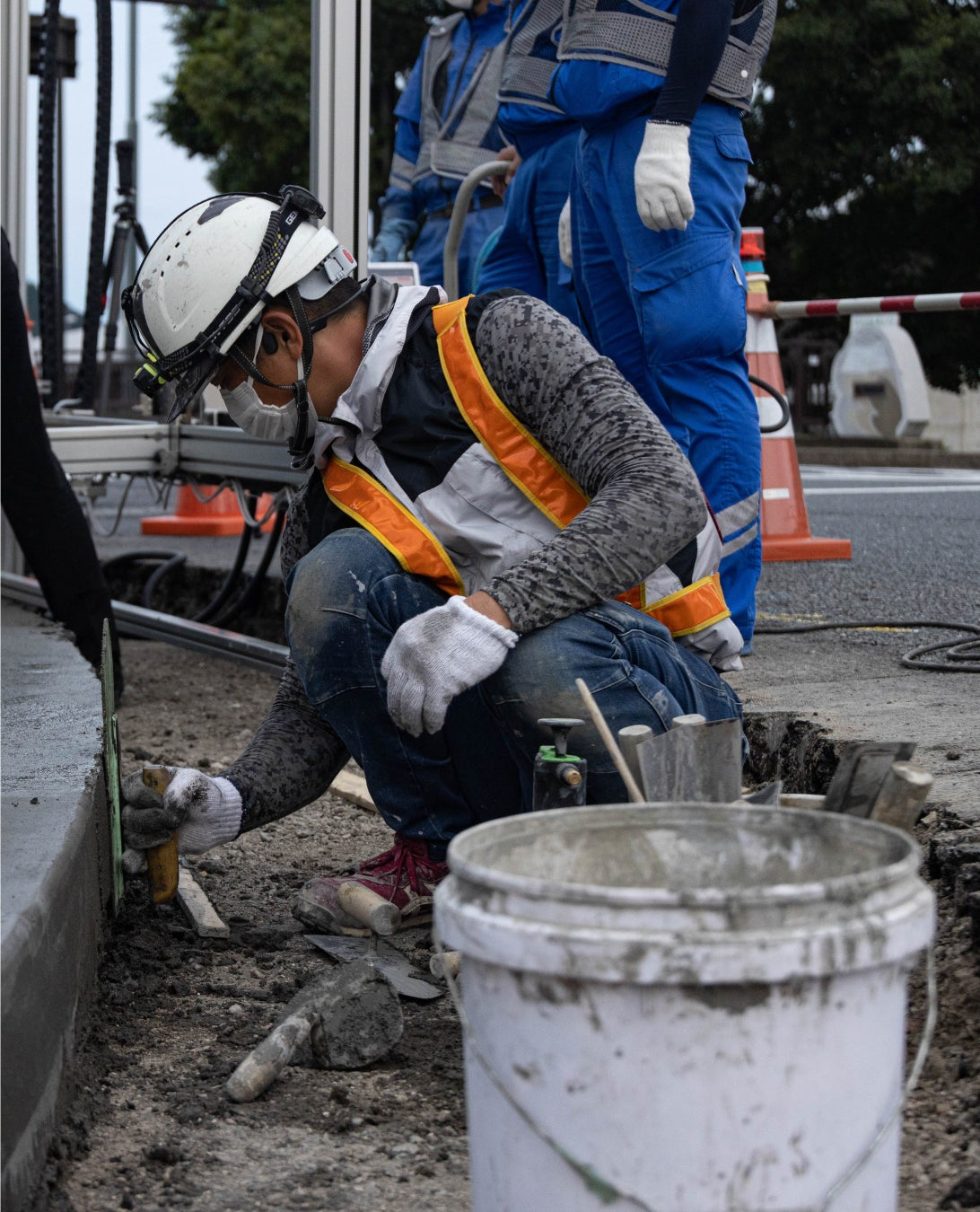
Plastering was carried out on the structure while it was being printed, and only the visible surfaces were smoothed and finished
Carrying out the plastering in parallel with printing made the work even more efficient
Printing directly at the construction location required the following, and the project proved that the construction 3D printer, materials and peripheral systems developed by Polyuse can meet these requirements.
- Adjusting the size of the 3D printer to fit the excavated area
- Printing on a 3% slope
- Setting the coordinates of the printing location and moving the 3D printer
- Stable printing at summer outdoor temperatures
■Adjusting the size of the 3D printer to fit the excavated area
To print directly at the installation location, the printing had to be done in a minimal amount of space. The 3D printer had to be set up within the excavated area and also moved each time to print the required curb sizes.
Polyuse's machines can be resized as needed. Taking advantage of this feature, we reconfigured the X-axis from its standard length of about 3,300 mm to a frame size of about 1,300 mm so that it would fit within the excavated area.
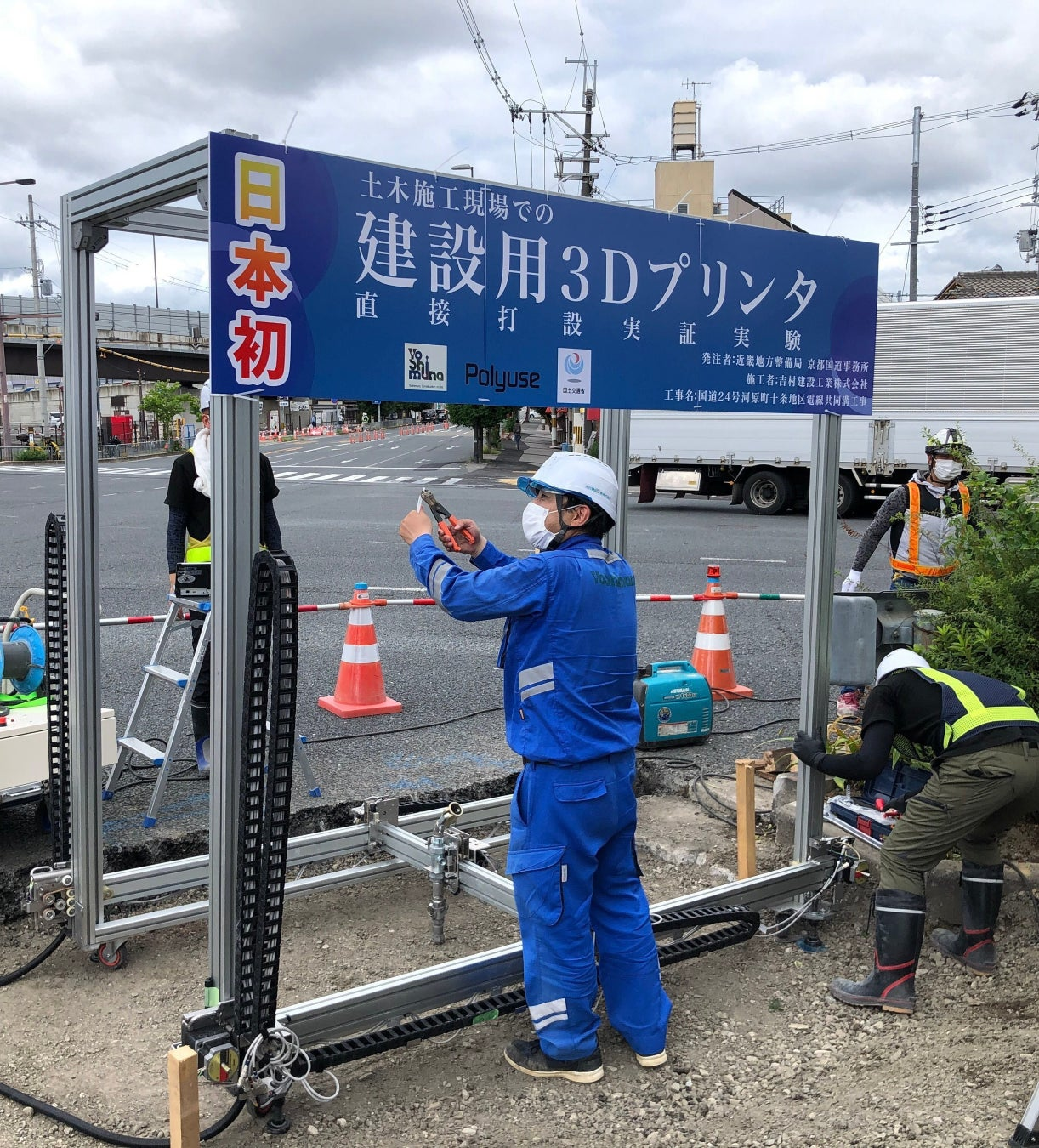
The size of the Polyuse 3D printer was optimized for this construction project
■Printing on a 3% slope
The construction environment where the 3D printer was installed for printing had a slope of about 3%, creating a risk that the material could collapse as it was built up, so we set up a simulated environment and carried out printing verification in advance.
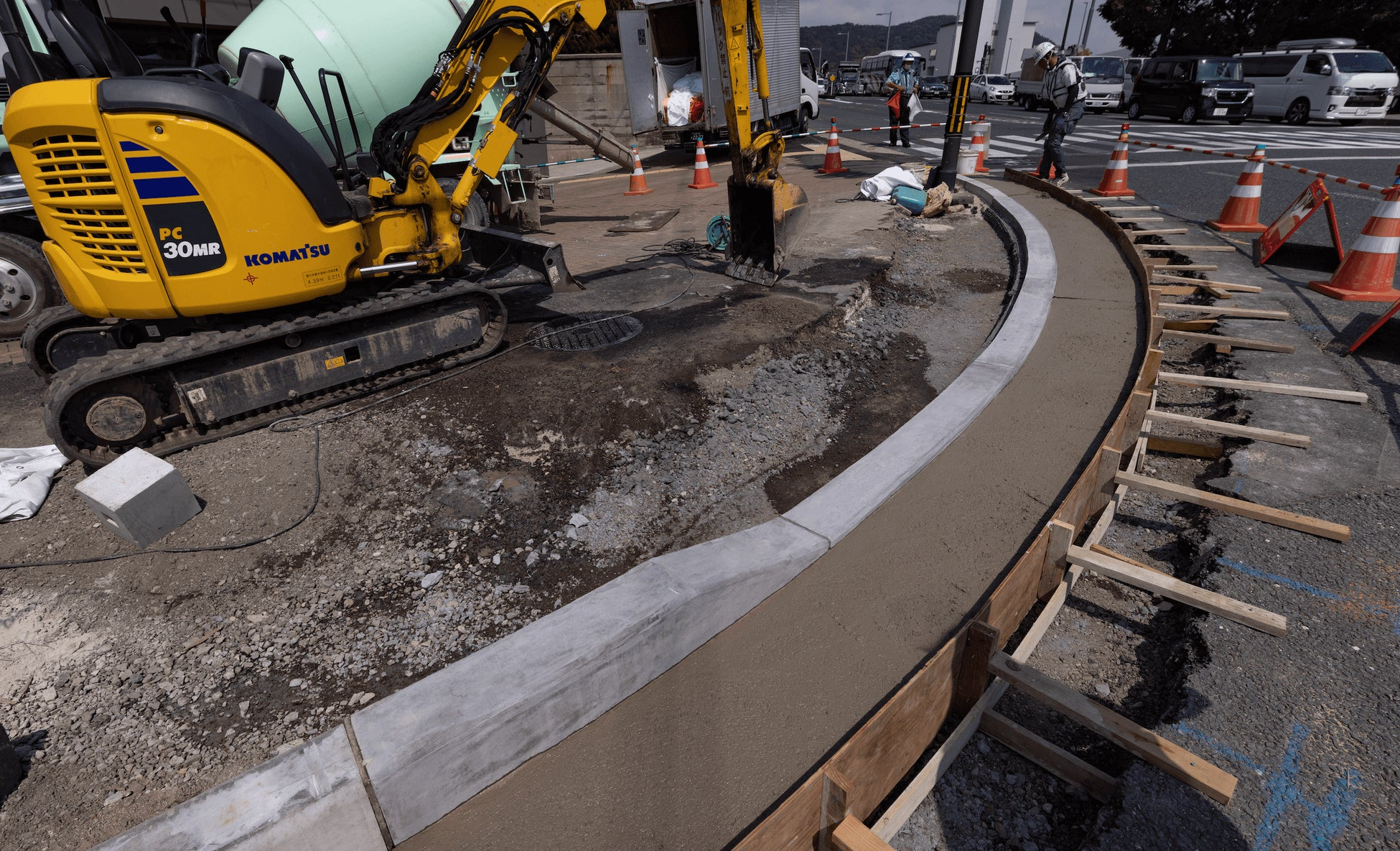
On the day of construction, the work was completed without a hitch; we will continue to build up evidence of the effectiveness of construction with Polyuse construction 3D printers
■Setting the coordinates of the printing location and moving the 3D printer
Printing directly on site required detailed checks and adjustments, such as deciding which point to use as the starting point for printing. Polyuse and Yoshimura Construction Industries therefore examined the implementation method in detail beforehand, determined in advance the points that needed to be measured, and made adjustments in preparation for the work. Surveying was carried out using a total station.
■Stable printing at summer outdoor temperatures
Close collaboration with MLIT and Yoshimura Construction Industries was essential in the lead-up to construction day, and we held careful discussions and worked closely together.
In addition, this 3D printer construction was carried out on site without any roof or walls to block direct sunlight, rain or wind. Although 3D printer construction is susceptible to external influences, Polyuse has carried out construction and demonstration experiments in summer, winter, the rainy season, outdoors and in other conditions, and for this project we established adjustment methods that allow reliable printing even in the high temperatures of Kyoto Prefecture in July and prepared functions to control them before carrying out the work.
- Benefits of this construction
Adopting this construction method was found to deliver two benefits.
The first is a significant reduction in construction time. Compared with transporting and installing ready-made precast products, installing a 3D printer directly on site and printing shortened the time needed to complete one section of work by 60%. Construction that affects road traffic inevitably affects passing vehicles and pedestrians through traffic restrictions and the like, so we believe there is great value in shortening the construction period and reducing the number of days that roads are closed.
The main reason for the shorter construction period was that the foundation concrete and the curb members, which were previously ready-made products, were formed as a single piece, allowing the concrete to be placed directly on site and shortening the curing period.
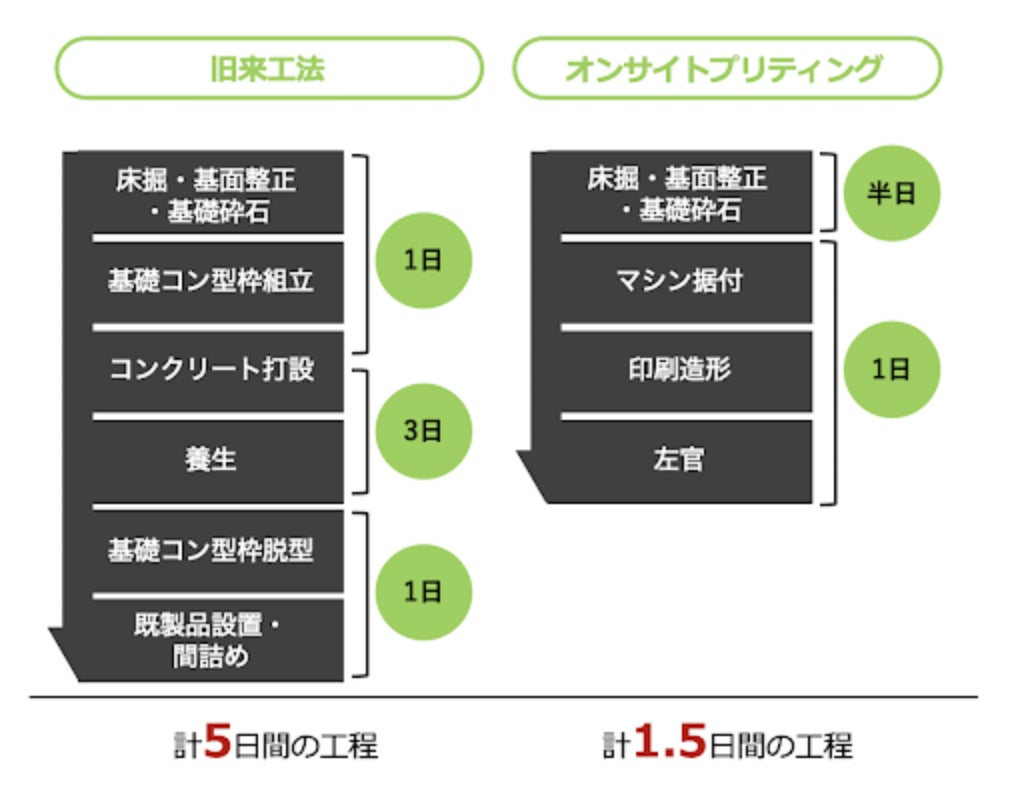
Construction period successfully shortened
The second benefit is that construction can be matched to any radius, flexibly adapting to the dimensions of each site. Because the radius and arc length of intersection curves differ from road to road, adjustments are needed for each site. Conventionally, straight members and the like were laid side by side and the gaps were filled in, but with a 3D printer, construction can be matched to any arc radius and arc length simply by changing the 3D CAD data.
At the same time, we identified areas for future improvement, such as aligning the printer to the installation coordinates and moving the machine on ground that is not level, and gained a clear understanding of what to improve in the future development of Polyuse construction 3D printers. Polyuse will continue to carry out research and development and verification in actual construction so that it can contribute even more to on-site construction.
- The importance of verifying effectiveness through actual construction
Polyuse has always placed great importance on dialogue with its partner companies, working with them on the practical use of 3D printers and the verification of their effectiveness while they share the construction sites they actually work on and the challenges they face.
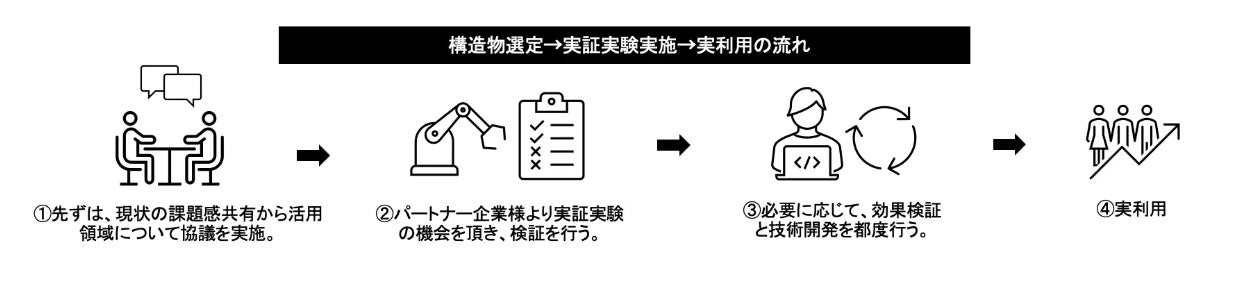
It is true that many aspects of the benefits and potential of 3D printer construction, in public works and in the construction industry as a whole, remain uncertain at present. However, as in this project, by carrying out actual construction together with its partner companies, Polyuse is verifying the benefits and optimizing operations.
Going forward, Polyuse and Yoshimura Construction Industries will continue to increase the number of construction 3D printer use cases in Japan, build up a track record with MLIT and other clients, spread the new technology of construction 3D printing, and press ahead as leaders both in Japan and overseas.
- Moving forward with our partner companies
[Seiichi Yoshimura, Director, Yoshimura Construction Industries]
By using a 3D printer to print the foundation concrete and the sidewalk-roadway boundary blocks directly on site, we were able to shorten the schedule by about two days compared with conventional construction using cast foundation concrete plus precast products. As a result, we were able to shorten the period during which the sidewalk was occupied and reduce the impact on local residents. Going forward, while selecting locations to which 3D printers are inherently well suited, we want to team up with Polyuse and keep building up demonstrations toward the automation of construction.
[Satoshi Noguchi, Senior Managing Director, Yoshimura Construction Industries]
At construction sites, a great deal of labor goes into transporting precast products such as sidewalk-roadway boundary blocks, which are too heavy to lift by hand, by truck, lowering them near the installation location with a mobile crane, and then installing them by hand. This whole sequence of work also carries a very high risk of injuries such as crushed fingers and feet. On the other hand, there are no ready-made sidewalk-roadway boundary blocks for curved sections, so the curves had to be formed by plastering on site. We proposed the theme of this verification in the hope that 3D printers could solve these problems. Although challenges remain, such as how to move the 3D printer, obtaining the 3D printer's position information linked to a world coordinate system, and material costs, I sense that 3D printers have the potential to solve the problems we have faced at construction sites. If the shapes, scale and locations of structures suited to 3D printers are selected, I believe 3D printers can be highly useful at construction sites.
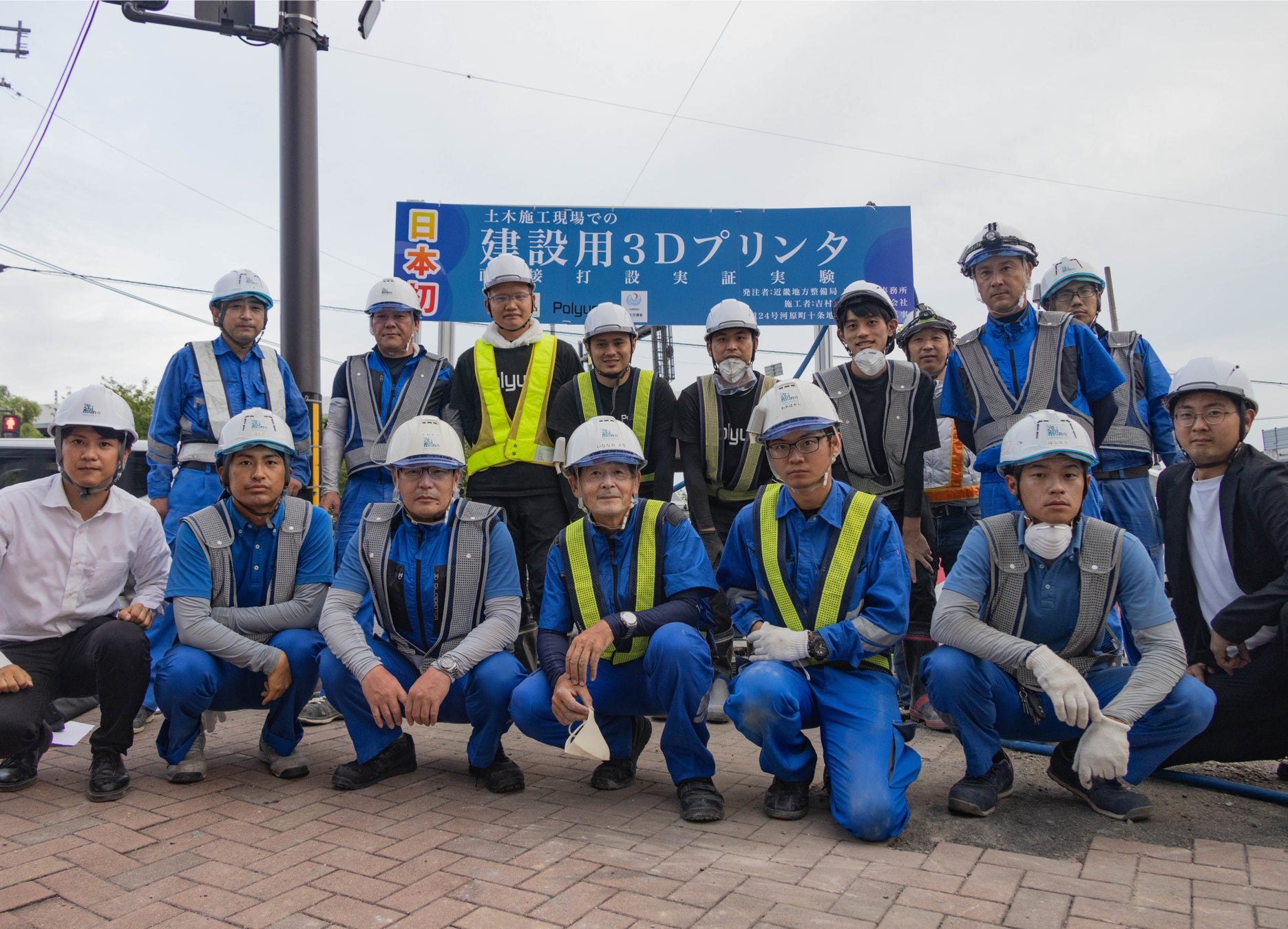
Group photo of Yoshimura Construction Industries and Polyuse (masks were removed only while the photo was being taken)
- The current state of the construction industry and the background to 3D printer development
The construction industry is now on the verge of major change.
Behind this lies a serious labor shortage, in stark contrast to the growth in construction investment driven mainly by the 2025 World Exposition (Expo 2025 Osaka, Kansai) and aging social infrastructure.
The labor shortage in the construction industry is an issue with major implications for the Japanese economy and infrastructure development, and the industry plays a vital role both in recovery work in the event of a disaster and in job creation.
However, according to materials published by MLIT, of the roughly 3.4 million skilled workers, about 1.1 million are increasingly likely to leave the workforce over the next 10 years due to aging and other factors, while few young people are entering the industry (those aged 29 and under make up only about 10% of the total)
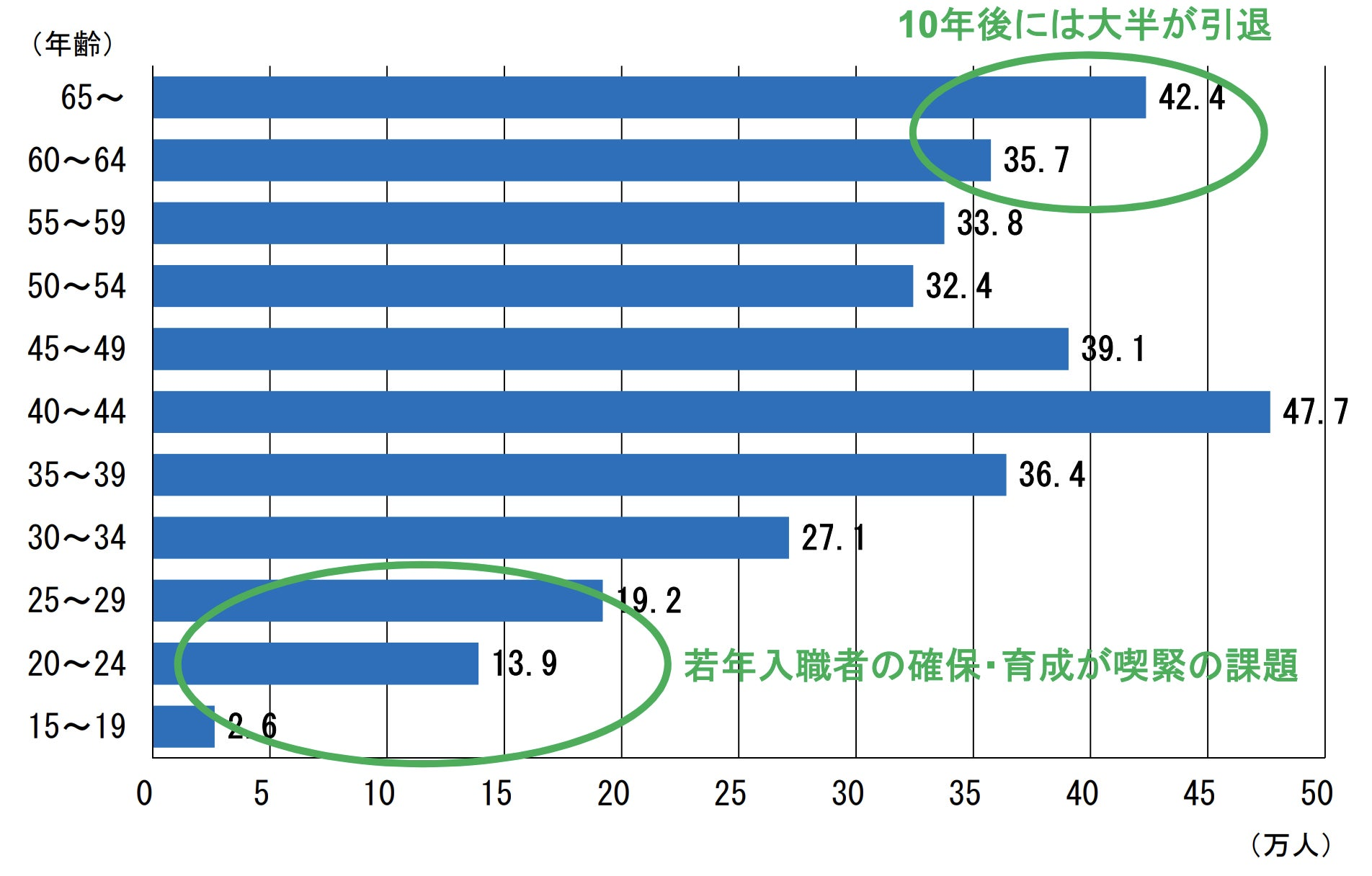
Source: MLIT, "Current Status and Challenges of the Construction Industry"
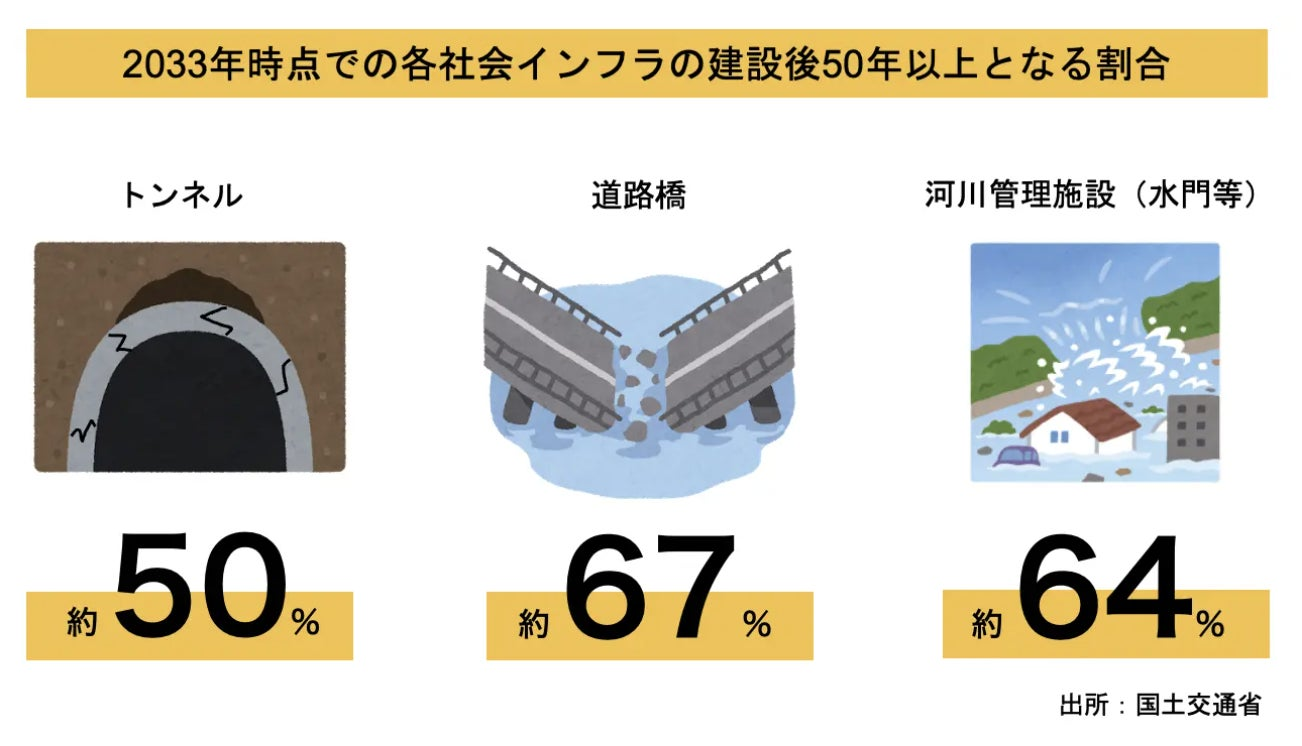
Furthermore, the social infrastructure that supports the lives of people in Japan is aging rapidly.
Infrastructure is generally said to have a service life of about 50 years. MLIT has announced that infrastructure built from the period of rapid economic growth onward, starting with Shuto Expressway Route 1, built around the time of the 1964 Tokyo Olympics, is aging rapidly, and that the proportion of facilities more than 50 years old is expected to rise at an accelerating pace over the next 20 years.
Accidents caused by aging social infrastructure have become a major social issue in recent years and, as exemplified by the ceiling panel collapse in the Sasago Tunnel on the Chuo Expressway in December 2012, can result in injuries or, in the worst cases, deaths.
As a result of inadequate repair and maintenance, damage worsens and danger increases, and infrastructure that can no longer be used has become a serious problem in municipalities across Japan, with many reported cases of road closures and traffic restrictions occurring on a daily basis.
To overcome this situation, in 2016 MLIT fully launched i-Construction, a new initiative that incorporates ICT to improve productivity in the construction industry.
As a result, technology development led mainly by construction companies is under way, and efforts to streamline and verify various processes in the construction industry are currently in progress.
Polyuse also believes that DX at actual construction sites is especially important for improving the industry's productivity, and is developing construction 3D printers as ICT construction machinery.
Going forward, we will create site environments where people can focus on productive, high-value work that only people can do, and, by handling the so-called 3K ("kitsui, kiken, kitanai": demanding, dangerous and dirty) work with construction 3D printers, robots and heavy machinery, we will pursue construction in which people and technology coexist, advancing implementation together with the national government, local governments and the construction industry.
- About Polyuse Inc.
Company name: Polyuse Inc.
Location: 2-2-15 Hamamatsucho, Minato-ku, Tokyo (development base in Kamakura City, Kanagawa Prefecture)
Representative Directors: Takuya Iwamoto / Wataru Ooka
Business: Planning, design, manufacturing and sales of hardware, software and services specialized for the construction industry, centered on construction 3D printers
Founded: June 2019
URL: https://polyuse.xyz/
X (formerly Twitter): https://twitter.com/polyuse
[Inquiries regarding this release]
Polyuse Inc. Public Relations Department
URL: https://polyuse.xyz/
Email: info@polyuse.xyz